Cross River Gorillas: Facts, Habitat, Conservation and Trekking
Cross River gorillas are a subspecies of the western gorilla and are among the rarest great apes in Africa. Their scientific name is Gorilla gorilla diehli, and they are found in a small area along the mountainous border between Cameroon and Nigeria in West Africa. Because of their extremely restricted distribution, small population and continuing threats from habitat loss and hunting, they are classified as Critically Endangered.
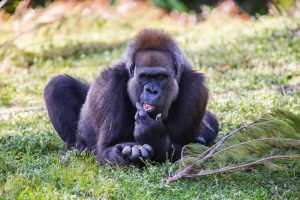
There are estimated to be only about 200 to 300 Cross River gorillas remaining in the wild. Rather than living in one large continuous population, they are scattered across at least 11 groups within the forests of southeastern Nigeria and western Cameroon. Their total range covers roughly 3,000 square miles, making their habitat considerably smaller than that of the more widespread Western Lowland Gorilla.
Cross River gorillas are particularly difficult to study because they inhabit rugged, mountainous forests and are naturally wary of people. Researchers have therefore had to use indirect methods, including nest surveys and observations of signs left behind by the gorillas, to estimate their numbers.
Their name comes from the Cross River region, although their distribution is not restricted to the river itself. They occur in a network of forests and protected areas along the Nigeria-Cameroon border. The region contains steep hills, tropical rainforest, lowland montane forest and valleys that provide important habitat for the gorillas.
Habitat of the Cross River Gorilla
The habitat of the Cross River gorilla is one of the most important factors in its survival. These gorillas depend on forest ecosystems that provide food, nesting sites, shelter and opportunities for movement between different groups.
Cross River gorillas live in a combination of lowland and montane forests. The terrain can be particularly rugged, with steep slopes and deep valleys. This difficult landscape has historically helped protect the gorillas from some forms of human disturbance, but it also makes conservation and scientific research challenging. The forests contain a variety of plants that form an important part of the gorillas’ diet. Leaves, shoots, stems, fruits, bark and other vegetation are consumed depending on what is available in different parts of the forest.
Unfortunately, the forests surrounding the Cross River gorillas are also under pressure from human activities. Agricultural expansion, timber extraction, settlement and other forms of forest use can reduce and fragment their habitat. Since the remaining gorilla groups are already small and isolated, further fragmentation can make it increasingly difficult for individuals to move between populations. Protecting the remaining forest is therefore one of the most important priorities for Cross River gorilla conservation.
Physical Characteristics of Cross River Gorillas
Cross River gorillas look very similar to Western Lowland Gorillas, and the differences between the two subspecies are not always obvious to an untrained observer. Scientific studies have identified differences in skull and tooth dimensions, as well as other physical characteristics.
They are large, powerful primates with strong arms, broad chests and muscular bodies. Adult males are considerably larger than females and develop the characteristic silver colouring on their backs as they mature. Like other gorillas, they have no tail and possess powerful hands that help them move through the forest and manipulate vegetation.
Their facial and cranial characteristics are particularly useful to scientists when distinguishing them from other gorilla populations. However, claims that Cross River gorillas have dramatically different faces or body structures should be treated carefully because their differences from Western Lowland Gorillas are relatively subtle. Their adaptation to rugged forest terrain is another interesting aspect of their biology. The Cross River region contains steep and difficult landscapes, and the gorillas must navigate these forests while searching for food and suitable places to rest.
Diet of Cross River Gorillas
Cross River gorillas are primarily herbivorous. Their diet consists largely of plant material, including leaves, stems, shoots, fruits, bark and other vegetation. They may also consume small invertebrates such as insects and other small forest organisms.
Their diet changes according to the availability of food in their environment. During periods when fruits are abundant, fruit may become an important part of their diet, while leaves, stems and shoots remain important throughout the year. Feeding occupies a significant portion of the gorillas’ daily activities. They move through the forest searching for suitable vegetation before stopping to feed and rest. This feeding behaviour also gives gorillas an important ecological role.
As they travel through forests and consume fruits, gorillas can disperse seeds through their dung. They may transport seeds over considerable distances, helping plants regenerate in different areas of the forest. Gorillas can also create small openings in vegetation as they move through and feed, contributing to the structure and diversity of the forest ecosystem.
Behaviour and Social Life
Cross River gorillas are social animals and generally live in groups. A group commonly includes an adult male, several females and their offspring, although group composition can change over time.
The silverback has an important role within the group. He helps protect members of the family, guides movements and can respond to threats from other animals or gorillas. Females and young gorillas also maintain strong social relationships through grooming, feeding and play.
Young gorillas spend many years close to their mothers. Infants are dependent on their mothers for protection, transportation and food before becoming increasingly independent as they grow older. Communication is another important part of their social behaviour. Gorillas use vocalizations, body movements, facial expressions and physical contact to communicate. Sounds such as grunts, barks and other calls can convey information between individuals.
Cross River gorillas are particularly elusive. Their tendency to avoid people is one reason why scientists have historically found them difficult to observe and study. It also means that conservation teams often have to rely on tracking signs, nests, feeding sites and other evidence when monitoring the population.
Conservation of Cross River Gorillas
The extremely small population of Cross River gorillas makes conservation an urgent priority. With only about 200 to 300 individuals remaining, the loss of even a small number of animals can have significant consequences for the future of the subspecies. Cross River gorillas face several threats. Habitat destruction and fragmentation are major concerns because agriculture, logging and other human activities can reduce the amount of suitable forest available to them.
Hunting and poaching are also important threats. Although hunting gorillas is illegal in both Nigeria and Cameroon, enforcement can be difficult in remote forest areas. For a population as small as that of the Cross River gorilla, even occasional killings can have serious consequences.
Another concern is the limited genetic diversity that can occur when a species or subspecies is divided into small, isolated populations. Cross River gorilla groups may have limited interaction with one another, increasing concerns about inbreeding and the loss of genetic diversity.
Disease is another potential threat to great apes. Gorillas can be susceptible to diseases that affect other primates, including pathogens that can be transmitted between humans and great apes. This makes responsible wildlife tourism, scientific research and appropriate health precautions especially important.
Protecting Cross River Gorilla Habitat
One of the most effective ways of protecting Cross River gorillas is protecting the forests in which they live. Conservation organizations and government agencies in Nigeria and Cameroon have worked to establish and strengthen protected areas within the Cross River gorilla’s range. Conservation also requires cooperation between the two countries because the gorillas live across an international border.
Cross-border conservation is particularly important because wildlife does not recognize political boundaries. A forest that is protected on one side of the border can still be affected by activities taking place nearby on the other side. Local communities are also central to successful conservation. People living around gorilla habitats depend on forests for agriculture, food, fuel and other resources. Conservation programs therefore increasingly focus on finding ways for communities to improve their livelihoods while reducing pressure on the remaining forests.
Education and awareness programs can help communities understand the ecological importance of gorillas and the benefits of protecting them. Conservation can be more successful when local people are involved in decisions about the management and use of natural resources.
Hunting and Poaching
Hunting remains an important concern for Cross River gorillas because their population is so small. Unlike some wildlife species that can withstand the loss of a limited number of individuals because of large populations, Cross River gorillas have very little room for additional losses. Illegal hunting may also target other wildlife, with gorillas sometimes becoming unintended victims of snares and other hunting methods. Removing hunting pressure from forests therefore benefits gorillas as well as other species. Law enforcement, ranger patrols, community education and cooperation between conservation authorities are important components of anti-poaching work.
Conservation organizations have also supported efforts to improve monitoring of the gorillas and protect the forests in which they live. WWF, for example, has worked with the governments of Nigeria and Cameroon and other partners on efforts to establish protected habitat across the border.
The Importance of the Gorilla Organization and Other Conservation Groups
Several conservation organizations have contributed to the protection of Cross River gorillas and their habitat. The Gorilla Organization has worked on gorilla conservation and community-focused initiatives in Central and West Africa, while other organizations and government agencies have supported research, habitat protection, community development and anti-poaching programs.
Successful conservation requires more than protecting individual animals. It involves protecting forests, supporting local communities, improving law enforcement, conducting scientific research and maintaining cooperation between neighboring countries. The Cross River gorilla is therefore an example of a species whose future depends on cooperation between governments, conservation organizations, researchers and communities. Despite the progress made, the subspecies remains at serious risk. Its extremely small population means that continued conservation attention is necessary.
Interesting Facts About Cross River Gorillas
The Cross River gorilla is one of the most fascinating and least-known gorilla subspecies in Africa. Here are some important facts about these rare primates.
They Are Critically Endangered
Cross River gorillas are classified as Critically Endangered, the highest threatened category before extinction in the wild. Their population is estimated at only about 200 to 300 individuals.
They Are Found Only in Nigeria and Cameroon
Unlike mountain gorillas, which occur in Uganda, Rwanda and the Democratic Republic of Congo, Cross River gorillas are restricted to the Nigeria-Cameroon border region.
Their restricted range is one of the major reasons why habitat protection is so important.
They Are One of the Rarest Great Apes
With only a few hundred individuals remaining, Cross River gorillas are among the rarest great apes in the world. Their small population makes them particularly vulnerable to disease, habitat loss, hunting and genetic problems.
They Were Scientifically Described in the Early 20th Century
The Cross River gorilla was scientifically described in 1904 by German zoologist Paul Matschie. Since then, research has gradually improved scientists’ understanding of their distribution, physical characteristics and behaviour. However, they remain much less studied than some other gorilla populations because they are extremely elusive and inhabit difficult terrain.
They Are Difficult to Study
Cross River gorillas are known for avoiding people. They live in rugged forest landscapes where direct observation can be challenging. Researchers therefore often rely on nests, feeding signs, footprints, vocalizations and other evidence to monitor their populations.
They Are Closely Related to Western Lowland Gorillas
Cross River gorillas are a subspecies of the Western Gorilla, alongside the Western Lowland Gorilla. Their appearance is therefore broadly similar, although scientists can distinguish the populations using differences in skull morphology, teeth, genetics and other characteristics.
How Different Are Cross River Gorillas From Other Gorilla Subspecies?
Cross River gorillas belong to the Western Gorilla species, while Mountain Gorillas and Grauer’s Gorillas belong to the Eastern Gorilla species. The two recognized gorilla species are therefore the Western Gorilla (Gorilla gorilla) and Eastern Gorilla (Gorilla beringei).
Within these two species there are four recognized subspecies: Western Lowland Gorilla, Cross River Gorilla, Mountain Gorilla and Eastern Lowland or Grauer’s Gorilla.
The Cross River gorilla’s most obvious difference from other gorillas is its very restricted geographical distribution. Mountain gorillas are adapted to high-altitude forests, while Cross River gorillas occupy mountainous and lowland forest environments along the Nigeria-Cameroon border. They are also different from Western Lowland Gorillas in certain skull and dental characteristics. However, they are physically similar enough that identifying them simply by appearance can be difficult.
Their social lives are also influenced by the fragmented nature of their habitat. The remaining groups are separated across several forest areas, which can limit interaction between populations and create conservation concerns about genetic diversity. Like other gorillas, they communicate through vocalizations, gestures, facial expressions and physical behaviour. Their calls may include grunts, barks and screams, while chest beating and body postures can communicate excitement, warning or dominance.
Trekking Cross River Gorillas
Seeing a Cross River gorilla in the wild would be an extraordinary wildlife experience because these animals are among the rarest great apes on Earth. However, Cross River gorilla tourism is very different from the established mountain gorilla trekking industry in Uganda and Rwanda.
Cross River gorillas are highly elusive, and their populations are small and fragmented. As a result, there is not the same widely established, predictable tourist trekking system found in Uganda’s Bwindi Impenetrable National Park or Rwanda’s Volcanoes National Park. Visitors interested in Cross River gorilla conservation should therefore carefully distinguish between established gorilla trekking destinations and specialized conservation or research experiences in the Nigeria-Cameroon border region.
Claims of a standard Cross River gorilla trekking permit costing between US$300 and US$1,000 should also be treated cautiously. There is no single standardized Cross River gorilla permit comparable to Uganda’s or Rwanda’s mountain gorilla permits. Access arrangements, conservation activities and visitor opportunities can vary by protected area, organization and prevailing security conditions.
The Cross River region can also present difficult terrain. Forest trails may be steep, muddy and challenging, and visitors should be prepared for changing weather and demanding hikes if an authorized wildlife or conservation experience is available. The primary objective in this region remains conservation rather than mass tourism. Any visitor activity must therefore prioritize the welfare of the gorillas and the protection of their habitat.
Best Time to Visit the Cross River Gorilla Region
The climate of the Nigeria-Cameroon border region is tropical, with substantial rainfall in many parts of the Cross River gorilla’s range. The traditional drier months can provide more manageable conditions for forest travel because trails are generally less muddy and slippery.
However, the best time to visit depends on the particular protected area and the type of experience being planned. Weather conditions vary across the region, and rainforest environments can receive rainfall even during periods generally considered dry. Rather than choosing a particular month solely on the expectation of seeing gorillas, travelers should first confirm whether a specific Cross River gorilla conservation or viewing experience is operating and whether visitor access is permitted.
The Future of the Cross River Gorilla
The future of the Cross River gorilla remains closely connected to the future of the forests along the Nigeria-Cameroon border. With only around 200 to 300 individuals remaining, protecting every population and maintaining connections between forest habitats are extremely important. Conservation efforts need to continue focusing on habitat protection, community involvement, anti-poaching work, scientific research and cross-border cooperation. Protecting forests also benefits many other species that share the same ecosystem.
The Cross River gorilla’s story is not only about a rare animal. It is also about the importance of protecting tropical forests and working with communities that depend on them. When forests remain intact, they provide habitat for gorillas, chimpanzees, forest elephants, birds, plants and countless other organisms.
Although the Cross River gorilla remains critically endangered, conservation efforts provide an opportunity to protect the remaining populations and prevent further decline. Their survival will depend on sustained protection of their habitat, effective law enforcement, scientific monitoring and cooperation between Nigeria, Cameroon, conservation organizations and local communities.
For anyone interested in African wildlife, the Cross River gorilla represents one of the continent’s most extraordinary conservation stories. Unlike the more famous mountain gorillas of Uganda, Rwanda and the Democratic Republic of Congo, these gorillas remain extremely elusive and little known. Protecting them is therefore essential not only for the survival of the subspecies but also for the preservation of one of West Africa’s most important forest ecosystems.