Species and Subspecies of Gorillas in Africa
Gorillas are among the most fascinating and recognizable great apes in Africa. They are powerful, intelligent and highly social animals that live mainly in the tropical forests of Central and East Africa. Although gorillas are often described generally as one type of animal, there are actually two recognized gorilla species: the Eastern Gorilla and the Western Gorilla. These two species are further divided into four recognized subspecies: the Eastern Lowland Gorilla, Mountain Gorilla, Western Lowland Gorilla and Cross River Gorilla.
Each gorilla subspecies has its own geographical range, physical characteristics, habitat preferences and conservation challenges. The Eastern Gorilla includes the Mountain Gorilla and Eastern Lowland Gorilla, also known as Grauer’s Gorilla. The Western Gorilla includes the Western Lowland Gorilla and the Cross River Gorilla.
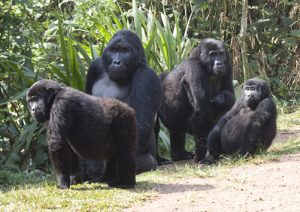
Gorillas are found in several countries across equatorial Africa, including Uganda, Rwanda, the Democratic Republic of Congo, Cameroon, Gabon, the Republic of Congo, the Central African Republic, Equatorial Guinea and Nigeria. Their habitats range from high-altitude mountain forests to lowland tropical rainforests.
Gorillas are also among Africa’s most threatened great apes. Habitat loss, hunting, disease, illegal activities and political instability in some parts of their range continue to place pressure on their populations. However, conservation efforts, particularly those protecting mountain gorillas, demonstrate that long-term protection, scientific research, veterinary care, tourism and cooperation with local communities can make a significant difference.
Eastern Gorillas
Eastern Gorillas belong to the species Gorilla beringei. They are primarily found in the forests of the eastern Democratic Republic of Congo, Uganda and Rwanda.
There are two recognized subspecies of Eastern Gorilla: the Eastern Lowland Gorilla, also known as Grauer’s Gorilla, and the Mountain Gorilla.
Although both subspecies are related, they occupy very different environments. Eastern Lowland Gorillas primarily inhabit lowland and montane forests of eastern DRC, while Mountain Gorillas are restricted to high-altitude forests in the Virunga Mountains and the Bwindi-Sarambwe region of Uganda and the Democratic Republic of Congo.
Both subspecies are classified as threatened, but their conservation situations are different. Mountain Gorilla numbers have increased significantly following decades of intensive conservation, while Grauer’s Gorillas continue to face serious threats from habitat destruction, hunting and instability in eastern DRC.
Eastern Lowland Gorillas
Eastern Lowland Gorillas, commonly known as Grauer’s Gorillas, are the largest of the four recognized gorilla subspecies. Their scientific name is Gorilla beringei graueri. They occur naturally in the eastern Democratic Republic of Congo, particularly in forests associated with protected areas such as Kahuzi-Biega National Park.
Grauer’s Gorillas have a stocky body, large hands and a relatively short muzzle. Adult males can weigh up to around 200 kilograms, although individual weights vary considerably. They are generally larger and heavier than Mountain Gorillas.
Their habitat includes lowland tropical rainforest as well as montane forest. They feed primarily on vegetation, including leaves, stems, herbs and fruit. Their diet changes according to what is available in different parts of their habitat and at different times of the year.
Eastern Lowland Gorillas are highly social and live in groups that can include several individuals. Groups are normally led by a dominant adult male or silverback. The silverback provides protection, helps maintain group cohesion and plays an important role in reproduction. Despite their large size, Grauer’s Gorillas are generally peaceful animals when left undisturbed. Like other gorillas, they can become defensive when they feel threatened.
Habitat and Conservation of Eastern Lowland Gorillas
Eastern Lowland Gorillas face serious conservation challenges. Their natural range has been reduced by agriculture, mining, logging, settlement and other human activities. Years of armed conflict and political instability in eastern Democratic Republic of Congo have made wildlife protection particularly difficult.
Kahuzi-Biega National Park remains one of the most important protected areas for this subspecies. However, conservation authorities and organizations have had to contend with illegal mining, poaching and human encroachment.
Historical estimates placed the population at approximately 17,000 individuals in the mid-1990s, but subsequent research indicates that the population has declined substantially. A precise current population count remains difficult because large areas of their range are difficult and sometimes dangerous for researchers to access.
Eastern Lowland Gorillas are currently classified as Critically Endangered. Their conservation therefore requires protection of forests, stronger law enforcement, community involvement and continued scientific monitoring. Unlike Mountain Gorillas, relatively few Grauer’s Gorillas have been habituated to human presence for tourism. This means that opportunities to observe them in the wild are much more limited.
Mountain Gorillas
Mountain Gorillas are perhaps the most famous of all gorillas because of their unique habitat, close relationship with conservation history and the remarkable experience of gorilla trekking. Their scientific name is Gorilla beringei beringei, and they are a subspecies of the Eastern Gorilla.
Mountain Gorillas live in two geographically separate populations. One population occupies the Virunga Massif, which stretches across Rwanda’s Volcanoes National Park, Uganda’s Mgahinga Gorilla National Park and the Democratic Republic of Congo’s Virunga National Park. The other population occurs in the Bwindi-Sarambwe conservation landscape, centered on Bwindi Impenetrable National Park in Uganda and contiguous habitat in the Democratic Republic of Congo.
Unlike Grauer’s Gorillas, Mountain Gorillas live at relatively high elevations. Their thick, long fur helps them cope with the cooler temperatures found in their mountainous environment. They have powerful bodies, long arms, broad chests and dark coats. Like other gorillas, each individual has a unique nose pattern, which researchers and trackers can use to identify animals.
Mountain Gorilla Social Life
Mountain Gorillas live in family groups generally led by a dominant silverback. A group may include adult females, infants, juveniles and sometimes other adult males. The silverback plays several important roles within the group. He protects the group from threats, leads movements between feeding areas and sleeping sites, helps maintain social order and fathers many of the group’s offspring.
Mountain Gorilla groups can change over time. Young males may eventually leave their natal groups, while groups can also split or merge as social relationships change. Gorillas communicate through vocalizations, facial expressions, body postures and physical interactions. Grooming and play are particularly important for strengthening relationships between members of a group.
Gorilla Habituation and Tourism
Mountain Gorillas are naturally wary of humans. Before a gorilla family can become available for tourism, it must undergo a carefully managed habituation process. Habituation involves gradually exposing gorillas to the presence of researchers, trackers and eventually tourists while ensuring that human contact does not cause unnecessary stress.
The process is not necessarily completed within one fixed period. The length of habituation can vary depending on the behaviour of the group and the objectives of the research or tourism program. It is therefore better to avoid stating that every gorilla group takes exactly three or five years to become habituated.
Once a group is habituated for tourism, visitors can participate in controlled gorilla trekking experiences. Tourism is strictly regulated, with rules designed to reduce disturbance and minimize the risk of disease transmission between humans and gorillas.
Mountain Gorilla Conservation Success
Mountain Gorilla conservation represents one of Africa’s most notable wildlife conservation success stories.
For many years, the subspecies was considered to be at extreme risk of extinction. However, intensive conservation programs involving governments, conservation organizations, researchers, veterinarians, park authorities and local communities have helped the population recover.
Mountain Gorillas are now classified as Endangered rather than Critically Endangered, following their 2018 downlisting by the IUCN. Their population has continued to increase, although they remain vulnerable and their long-term survival still depends on continued conservation. Current estimates place the total wild population at just over 1,000 individuals, distributed between the Virunga Massif and Bwindi-Sarambwe populations. This makes the Mountain Gorilla particularly important to conservation and responsible tourism in Uganda, Rwanda and the Democratic Republic of Congo.
Western Gorillas
The second recognized gorilla species is the Western Gorilla, scientifically known as Gorilla gorilla. Western Gorillas are mainly found in the tropical forests of Central and West-Central Africa. There are two recognized subspecies: the Western Lowland Gorilla and the Cross River Gorilla.
Western Gorillas are separated geographically from Eastern Gorillas by a large area of Congo Basin forest. Their habitats include lowland rainforests, swamp forests and montane forest environments. Both Western Gorilla subspecies face serious conservation challenges, although the Western Lowland Gorilla is much more numerous and widely distributed than the Cross River Gorilla.
Western Lowland Gorillas
The Western Lowland Gorilla, Gorilla gorilla gorilla, is the most widespread and numerous of the four recognized gorilla subspecies. They occur primarily in Cameroon, the Central African Republic, Equatorial Guinea, Gabon and the Republic of Congo, with possible remnant populations in the Democratic Republic of Congo.
Western Lowland Gorillas are slightly smaller than the Eastern Lowland Gorilla and can be distinguished by their brown-grey coats and sometimes reddish or auburn colouring on the chest and head. They live in tropical forests where they feed mainly on fruits, leaves, stems, herbs and other vegetation. Their diet changes according to seasonal availability.
Like other gorillas, Western Lowland Gorillas live in social groups led by dominant males. They communicate using vocalizations, body movements and facial expressions and maintain strong social relationships within their groups.
Threats to Western Lowland Gorillas
Despite being the most widespread gorilla subspecies, Western Lowland Gorillas face severe conservation threats. Habitat destruction and fragmentation caused by logging, agriculture, mining and infrastructure development can reduce the amount of forest available to them. Poaching is another major concern.
Disease is also a serious threat. Ebola outbreaks have caused devastating losses among Western Lowland Gorillas in parts of Central Africa. Because gorillas reproduce slowly, recovering from major population losses can take many years. Unlike Mountain Gorillas, the total population of Western Lowland Gorillas cannot be accurately determined because many live in extremely remote and dense forests. Conservation organizations therefore rely on surveys, nest counts and other scientific methods to estimate their numbers. Western Lowland Gorillas are classified as Critically Endangered.
Cross River Gorillas
The Cross River Gorilla, Gorilla gorilla diehli, is the rarest of the four gorilla subspecies. It is found in a small region along the border between Nigeria and Cameroon.
The Cross River Gorilla is a subspecies of the Western Gorilla and is closely related to the Western Lowland Gorilla. The two can be difficult to distinguish visually, although researchers have identified differences in skull and tooth dimensions as well as other characteristics. Cross River Gorillas live in rugged forest landscapes, including lowland and montane forests. Their range is highly fragmented, and groups are separated by areas occupied by people.
Current estimates suggest that only around 200 to 300 Cross River Gorillas remain in the wild, making them one of Africa’s rarest great apes. Rather than saying that exactly 200 individuals remain, it is more accurate to use a range because counting these gorillas is extremely difficult.
Conservation of Cross River Gorillas
Cross River Gorillas face threats from habitat fragmentation, hunting and human encroachment. Because their remaining populations are small and fragmented, the loss of even a few individuals can have a significant impact. Small populations can also face reduced genetic diversity and increased risks associated with isolation.
Conservation programs focus on protecting forest habitat, strengthening protected areas, reducing hunting and working with communities living around the gorilla range. Cross-border cooperation between Nigeria and Cameroon is particularly important because the gorillas do not recognize political boundaries. Cross River Gorillas are classified as Critically Endangered.
Comparing the Four Gorilla Subspecies
Although all four gorilla subspecies belong to the same gorilla family, they differ considerably in appearance, habitat and conservation status.
The Eastern Lowland Gorilla, or Grauer’s Gorilla, is the largest subspecies and is found mainly in eastern Democratic Republic of Congo.
The Mountain Gorilla is adapted to high-altitude forests and is found in the Virunga Massif and the Bwindi-Sarambwe landscape. It is the only gorilla subspecies whose wild population has shown a sustained increase in recent decades.
The Western Lowland Gorilla is the most widespread and numerous subspecies. It occupies extensive rainforest landscapes across Central Africa, although its exact population is difficult to determine.
The Cross River Gorilla has the smallest population and the most restricted geographical range, occurring only along the Nigeria-Cameroon border.
These differences demonstrate why gorilla conservation cannot follow a single approach. Each subspecies faces different ecological, geographical and human pressures.
Conservation Efforts for Gorillas
All four gorilla subspecies face significant threats, although the nature and intensity of those threats vary between populations. Major conservation challenges include habitat destruction, forest fragmentation, poaching, disease and human-wildlife conflict. In parts of Central and East Africa, political instability and armed conflict can make wildlife protection even more difficult.
Conservation programs therefore use a combination of strategies. These include protected-area management, anti-poaching patrols, scientific research, veterinary care, habitat restoration, community conservation and regulated tourism.
Mountain Gorilla conservation demonstrates the potential of this approach. Decades of collaboration between governments and conservation organizations have contributed to the recovery of the population. Veterinary organizations such as Gorilla Doctors provide health monitoring and treatment to habituated Eastern Gorillas, while organizations such as the International Gorilla Conservation Programme support broader conservation initiatives. For other subspecies, conservation remains more challenging because much of their habitat is remote or affected by insecurity, mining, logging and other pressures.
The Importance of Local Communities
Gorilla conservation cannot succeed without the involvement of people living around gorilla habitats. Communities depend on forests for agriculture, water, food, fuel and other resources. Conservation programs therefore need to provide practical benefits and alternatives that reduce pressure on protected forests.
Education, employment, revenue-sharing programs, community tourism and sustainable livelihood projects can all contribute to conservation. When communities receive tangible benefits from protecting wildlife, conservation can become a shared responsibility rather than simply a government or park-authority activity.
Gorilla Tourism and Conservation
Tourism has become an important component of gorilla conservation, particularly in Uganda and Rwanda. Gorilla trekking allows visitors to enter protected forests with trained guides and observe habituated gorilla groups in their natural environment. The experience creates employment for guides, trackers, porters, drivers, accommodation providers and other people involved in the tourism industry.
Tourism also creates an economic incentive to maintain protected forests and protect gorillas. However, gorilla tourism must be carefully managed because excessive human contact can increase stress and disease risks. Visitors are therefore required to follow strict rules. These can include maintaining an appropriate distance, avoiding visits when sick, limiting the duration of encounters and following the instructions of guides and park authorities. Responsible tourism can therefore contribute to conservation while giving travelers an opportunity to appreciate one of Africa’s most extraordinary wildlife species.
Why Gorillas Are Important to Forest Ecosystems
Gorillas are not only important because of their cultural and tourism value. They also play an ecological role in the forests where they live. Because gorillas consume large quantities of vegetation and fruit, they can help disperse seeds across their home ranges. Some fruits contain large seeds that smaller animals cannot easily consume or transport. Gorillas can therefore contribute to the regeneration and diversity of tropical forests.
Their presence can also indicate the health of a forest ecosystem. Protecting gorillas often means protecting the wider forest habitat that supports numerous other species. A gorilla conservation project can therefore have benefits far beyond gorillas themselves. Protecting their habitat can also help conserve birds, elephants, chimpanzees, monkeys, insects, reptiles and countless plant species.
Gorillas and Their Relationship With Humans
Gorillas are among our closest living relatives. They share approximately 98.3% of their DNA with humans, although this does not mean that humans and gorillas are genetically identical. Their intelligence, social relationships and communication abilities have made them important subjects of scientific research. Gorillas can recognize individuals, remember locations, communicate through different sounds and gestures, and develop strong relationships within their groups.
Their similarities to humans are also one reason why disease transmission is an important concern. Some pathogens can affect both humans and gorillas, making responsible tourism and careful veterinary monitoring essential.
Conclusion
Gorillas are among Africa’s most remarkable animals, and understanding the differences between the four recognized subspecies helps explain the importance of protecting each population.
There are two gorilla species (the Eastern Gorilla and the Western Gorilla) and four recognized subspecies. The Eastern Gorilla includes the Eastern Lowland Gorilla, or Grauer’s Gorilla, and the Mountain Gorilla. The Western Gorilla includes the Western Lowland Gorilla and the Cross River Gorilla.
The Eastern Lowland Gorilla is the largest of the four and is found mainly in the forests of eastern Democratic Republic of Congo. The Mountain Gorilla occupies the high-altitude forests of the Virunga Massif and the Bwindi-Sarambwe landscape and has become one of the world’s most important conservation success stories.
The Western Lowland Gorilla is the most widespread subspecies, occurring across several Central African countries, while the Cross River Gorilla survives in a small area along the Nigeria-Cameroon border and has only around 200 to 300 individuals remaining in the wild. All four subspecies continue to face serious threats. Habitat loss, hunting, disease, human encroachment and political instability can have devastating consequences for populations that already reproduce slowly.
At the same time, the recovery of Mountain Gorilla numbers shows that conservation can make a measurable difference. Long-term protection, veterinary care, scientific research, law enforcement, community participation and responsible tourism have all contributed to this progress. Protecting gorillas is therefore not simply about saving a charismatic animal. It is about protecting some of Africa’s most important forests and the many species and communities that depend on them.
For travelers, gorilla trekking provides an opportunity to see these magnificent animals in their natural habitats while contributing to a tourism system that supports conservation and local communities. Whether visiting Uganda’s Bwindi and Mgahinga forests, Rwanda’s Volcanoes National Park, the Democratic Republic of Congo’s Virunga and Kahuzi-Biega landscapes, or specialized conservation destinations elsewhere in Central Africa, responsible tourism can help ensure that gorillas continue to survive in the wild for future generations.