What to Expect on a Uganda Safari
What a memorable and most exciting experience a Uganda safari is! Uganda is one of Africa’s most beautiful and diverse safari destinations. It offers visitors an opportunity to experience wildlife, primates, birds, culture, mountains, forests, lakes and rivers within one relatively compact country. Whether you are travelling alone, with family, as a couple, with friends or as part of a larger group, a Uganda safari can be designed around your interests, budget and available time.
A Uganda safari can be a solo or group safari that takes you to the Pearl of Africa for leisure, adventure, research, education or business. Uganda is located in East Africa and shares borders with Kenya, Tanzania, Rwanda, the Democratic Republic of Congo and South Sudan. Its location gives the country a remarkable mixture of landscapes, wildlife and cultures. From the open savannahs of Murchison Falls and Queen Elizabeth National Parks to the thick tropical forests of Bwindi and Kibale, Uganda provides a variety of experiences for travellers looking for something beyond a traditional African safari.
Uganda also enjoys a generally favourable tropical climate, although conditions vary depending on altitude and region. Most parts of the country experience two broad rainy periods and two relatively drier periods. However, weather patterns are not always predictable, and rainfall can occur even during traditionally dry months. This variety in climate contributes to the country’s green landscapes, forests, wetlands and abundant wildlife.
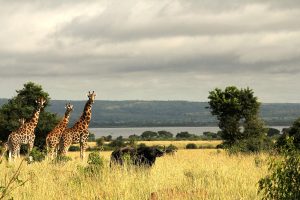
Uganda National Parks and Wildlife
A Uganda safari can take you through 10 national parks, together with wildlife reserves, sanctuaries and other protected areas. The country’s ten national parks are Murchison Falls, Queen Elizabeth, Kibale, Bwindi Impenetrable, Mgahinga Gorilla, Kidepo Valley, Lake Mburo, Semuliki, Rwenzori Mountains and Mount Elgon National Parks.
Most of the country’s major safari destinations are concentrated in western and southwestern Uganda, although Kidepo Valley National Park in northeastern Uganda offers a completely different experience. Each park has its own character, scenery and wildlife species, meaning that a safari itinerary can be designed to combine several different environments.
Uganda is also home to more than 350 species of mammals and more than 1,000 recorded bird species. This makes the country particularly attractive to wildlife enthusiasts and birdwatchers. In addition to wildlife, Uganda has numerous lakes, rivers, mountains, forests, wetlands, waterfalls and crater lakes, providing opportunities for activities beyond traditional game drives.
The country’s nickname, the Pearl of Africa, became famous after Winston Churchill described Uganda in glowing terms following his visit to the country in the early twentieth century. The description remains closely associated with Uganda’s beautiful scenery, fertile landscapes and extraordinary diversity. Therefore, while on your Uganda safari, expect to see and experience much more than just animals.
Mountain Gorillas in Uganda
One of the biggest attractions on a Uganda safari is the opportunity to encounter the rare and endangered mountain gorillas. Uganda is home to more than half of the world’s remaining mountain gorillas, with the majority living in Bwindi Impenetrable National Park and the rest in Mgahinga Gorilla National Park.
Gorilla trekking is one of Uganda’s most memorable wildlife experiences. Visitors walk through the dense forests accompanied by trained guides and trackers in search of a habituated gorilla family. The trek can take several hours depending on where the gorillas are located on that particular day.
Once the gorilla family is located, visitors are allowed a maximum of one hour observing the gorillas under the applicable trekking regulations. During this time, you may watch them feed, rest, groom one another, play and interact with other members of their family.
For travellers looking for a longer and more immersive experience, Uganda also offers the Gorilla Habituation Experience in Bwindi. This activity allows visitors to spend up to four hours with a gorilla group undergoing habituation, subject to the applicable regulations and conditions.
Gorilla trekking is not simply about seeing an animal. It is an experience that takes visitors deep into one of Africa’s oldest and most important forests. The sounds of birds, the thick vegetation, steep slopes and possibility of encountering other forest species all contribute to the adventure.
The Big Five on a Uganda Safari
Uganda is also a destination for travellers interested in the famous Big Five: lions, elephants, leopards, buffaloes and rhinoceroses.
Murchison Falls National Park, Uganda’s largest national park, is one of the main destinations for viewing several of these animals. Game drives in the northern sector of the park provide opportunities to encounter large herds of elephants and buffaloes, as well as lions, leopards, giraffes, antelopes and many other species.
Rhinoceroses are not currently found wild in Murchison Falls National Park. Instead, travellers can visit the Ziwa Rhino Sanctuary in Nakasongola, where guided rhino tracking provides an opportunity to see southern white rhinoceroses at relatively close range.
A Uganda safari can therefore combine traditional game drives with rhino tracking, allowing visitors to encounter all of the Big Five during one extended itinerary.
Murchison Falls itself is another major attraction. A boat cruise along the Victoria Nile takes visitors toward the base of the falls, where the Nile is forced through a narrow gorge before plunging through the rocks. The boat trip is also a wildlife experience because visitors can often see hippos, crocodiles, elephants and numerous water birds along the riverbanks.
Chimpanzee Tracking and Habituation
Chimpanzees are another major attraction on a Uganda safari. Uganda is one of the best destinations in Africa for encountering these intelligent and fascinating great apes.
The most famous destination for chimpanzee tracking is Kibale National Park, often described as one of Africa’s leading primate destinations. The forest is home to large numbers of chimpanzees and several other primate species.
During normal chimpanzee tracking, visitors follow experienced guides and trackers into the forest in search of a habituated chimpanzee community. Once the chimpanzees are located, visitors can spend a maximum of one hour observing them under the current guidelines.
For travellers interested in spending more time learning about chimpanzee behaviour, the Chimpanzee Habituation Experience provides an opportunity to spend up to four hours with the animals. This experience gives visitors more time to observe feeding, movement, communication, social interactions and other behaviours.
Chimpanzees can also be encountered in the Kyambura Gorge area of Queen Elizabeth National Park. Other forests and conservation areas in Uganda provide additional opportunities to encounter primates, including Budongo Forest and Kalinzu Forest.
Uganda’s chimpanzee conservation story has also continued to develop. In 2025, a dedicated chimpanzee census in Bwindi Impenetrable National Park estimated approximately 426 chimpanzees distributed across the park. This was significant because Bwindi has traditionally been internationally recognized primarily for its mountain gorillas, while the census provided new information about its chimpanzee population.
Uganda’s Unique Cultures and Community Experiences
A Uganda safari is not complete without experiencing the country’s rich cultures and local communities. Uganda is home to numerous ethnic groups, each with its own traditions, languages, food, music, dances and ways of life.
Community tourism provides travellers with an opportunity to interact with local people and learn about their traditions. Depending on the destination, visitors may participate in traditional dances, learn about local crafts, taste traditional foods and drinks, visit community projects or explore villages accompanied by local guides.
One example is the Batwa experience in southwestern Uganda. The Batwa have a deep historical connection with the forests of the Albertine Rift, including the forests around Bwindi and Mgahinga. Community experiences provide visitors with an opportunity to learn about traditional forest knowledge, hunting techniques, medicinal plants, music, storytelling and other aspects of Batwa heritage.
Other communities around Uganda’s national parks have also developed tourism activities. These experiences can contribute to local livelihoods while giving travellers a deeper understanding of Uganda beyond wildlife and landscapes.
Tree-Climbing Lions of Ishasha
Another unforgettable experience on a Uganda safari is searching for the famous tree-climbing lions of Ishasha in the southern sector of Queen Elizabeth National Park.
Unlike most lions that spend much of their time on the ground, the lions of Ishasha are known for regularly climbing and resting in trees. They may be seen lying on large branches, particularly during the hotter parts of the day.
The reasons for this behaviour are not completely understood, but the elevated position may provide relief from insects, allow the lions to enjoy a breeze and give them a good view of their surroundings.
Ishasha is not only about lions. The sector also contains elephants, buffaloes, antelopes, hippos and numerous bird species. Its remote setting and open savannah landscapes make it an exciting part of a safari, particularly for travellers combining Queen Elizabeth National Park with Bwindi Impenetrable National Park.
Birdwatching in Uganda
Uganda is a paradise for birdwatchers. The country has a remarkable bird list of more than 1,000 recorded species, including resident birds and migratory species.
The diversity of habitats is one of the major reasons for Uganda’s impressive birdlife. Forests, savannahs, wetlands, lakes, rivers, mountains and agricultural landscapes all support different bird species.
Some of the birds that visitors may encounter include the shoebill, great blue turaco, African fish eagle, kingfishers, bee-eaters, hornbills and numerous species of sunbirds. The shoebill is particularly sought after by birdwatchers because of its unusual appearance and limited distribution.
Birdwatching can be incorporated into almost any Uganda safari. Even visitors who are primarily interested in gorillas or wildlife may encounter colourful forest birds while trekking through Bwindi, Mgahinga or Kibale.
For dedicated birdwatchers, Uganda can also be planned as a specialised birding destination, with longer stays in forests, wetlands and other important bird habitats.
Crater Lakes of Western Uganda
Uganda’s scenery offers much more than wildlife. The western part of the country is particularly famous for its beautiful crater lakes, many of which are concentrated around the Fort Portal, Ndali-Kasenda and surrounding areas.
These crater lakes were formed through volcanic and geological processes and are now surrounded by green hills, forests, tea plantations and local communities. Their calm waters and dramatic landscapes provide excellent opportunities for photography and relaxation.
The crater lake region around Kibale can be combined with chimpanzee tracking and other primate experiences. Visitors may also explore nearby communities, walk around the lakes, enjoy birdwatching or simply take in the scenery.
The surrounding forests contain several primate species, including black-and-white colobus monkeys, red-tailed monkeys and vervet monkeys. This makes the crater lake region an excellent addition to a western Uganda itinerary.
Depending on the particular lake and local regulations, activities may include canoeing, nature walks, birdwatching and cultural experiences. Visitors should always follow local safety guidance before swimming or undertaking activities on the water.
Mountains, Forests and Adventure
A Uganda safari can also include mountain and forest adventures. The Rwenzori Mountains, known as the Mountains of the Moon, offer challenging multi-day trekking experiences for travellers interested in mountain adventures.
Mount Elgon in eastern Uganda provides another opportunity for hiking and exploring mountain landscapes. Mgahinga Gorilla National Park combines mountain scenery with gorilla and golden monkey experiences.
For visitors interested in adventure rather than traditional game drives, Uganda also offers white-water rafting and other activities along the River Nile, especially around Jinja. These experiences can easily be combined with wildlife safaris, creating a diverse holiday that includes both relaxation and adventure.
More Than a Traditional African Safari
There is much more to a Uganda safari than what has been listed above. Travellers can enjoy boat cruises, nature walks, cultural tours, mountain hiking, primate tracking, birdwatching, community experiences and traditional game drives.
Uganda’s protected-area system continues to evolve, with conservation authorities working to strengthen wildlife protection, improve tourism experiences and increase community involvement. Recent conservation planning has also highlighted the importance of protecting wildlife habitats outside traditional national parks, including forests, wetlands and other landscapes where wildlife continues to survive.
This makes responsible tourism increasingly important. Choosing responsible tour operators, respecting wildlife regulations, following the instructions of guides and supporting local communities can help ensure that tourism contributes positively to conservation.
Plan Your Uganda Safari
A Uganda safari offers an opportunity to experience some of Africa’s most remarkable wildlife and landscapes in one destination. From mountain gorillas disappearing into the misty forests of Bwindi to chimpanzees calling from the trees of Kibale, from lions resting in the trees of Ishasha to elephants crossing the savannahs of Murchison Falls, there is always something memorable to discover.
Beyond wildlife, Uganda offers welcoming communities, fascinating cultures, beautiful crater lakes, powerful rivers, towering mountains and some of the most diverse birdlife in Africa.
Whether you have a few days or several weeks, your Uganda safari can be tailored to match your interests. You can combine gorilla trekking with wildlife viewing, chimpanzee tracking with cultural experiences, or mountain hiking with a relaxing boat cruise.
Therefore, there is much more to see and do than what is listed here. All you need to do is consult us, and we will help you plan a memorable Uganda safari designed around the experiences you want to discover in the Pearl of Africa.