Uganda Budget Tours
Uganda, popularly known as the “Pearl of Africa,” is a country of enormous natural and cultural potential. Situated in East Africa, Uganda is a landlocked country surrounded by equally naturally endowed destinations, including Kenya to the east, Tanzania to the south, Rwanda to the southwest, the Democratic Republic of Congo to the west, and South Sudan to the north. Despite being landlocked, Uganda has a remarkable variety of landscapes, wildlife, forests, mountains, lakes and rivers that make it one of Africa’s interesting destinations for travelers.
Uganda is not only naturally gifted but is also culturally diverse. The country is home to numerous ethnic communities, each with its own traditions, languages, food, dances, beliefs, dress, music and ways of life. Uganda is commonly described as having more than 50 recognized indigenous ethnic groups, rather than the often-stated figure of 80 tribes. This diversity creates a rare opportunity for tourists to choose from many cultural experiences depending on the region they visit.
Some of the well-known cultural groups include the Baganda, Banyoro, Basoga, Banyankole, Bagisu, Acholi, Iteso, Alur, Langi, Karamojong, Lugbara, Bakiga, Batoro and many others. Each community has developed traditions that have been passed from one generation to another.
Most of these communities have social structures that have historically been influenced by kingdoms, chiefdoms, clans and other forms of traditional leadership. Uganda still has several traditional cultural institutions, including kingdoms such as Buganda, Bunyoro-Kitara, Busoga, Tooro and Rwenzururu. Traditional leaders, including kings and chiefs, continue to play cultural roles in preserving heritage and identity, although they do not exercise Uganda’s political state authority.
This cultural diversity adds another dimension to tourism in Uganda. A visitor can move from one region to another and encounter completely different traditions, landscapes and ways of life.
Kampala and the People of Uganda
Kampala, Uganda’s capital city, is the country’s main commercial and administrative center and serves as an important starting point for many Uganda tours. The city has grown into a large metropolitan area with surrounding urban centers, busy markets, restaurants, shopping areas, cultural sites and entertainment venues.
For many international visitors, Kampala provides the first introduction to everyday life in Uganda. The city offers opportunities to explore local markets, taste Ugandan food, visit historical and cultural sites, experience nightlife and interact with local communities.
Ugandans are also widely known for their welcoming attitude toward visitors. Hospitality is an important part of many Ugandan communities, and travelers can experience this through local interactions, cultural tours, community visits and ordinary encounters during their journey.
However, traveling in Uganda does not necessarily require a large budget. As circumstances arise, visitors may sometimes find themselves constrained financially, making it difficult to participate in every activity they originally planned. The good news is that travelers on a limited budget can still enjoy a memorable Uganda safari without necessarily choosing the most expensive experiences.
A budget trip can combine affordable accommodation, public or shared transportation, local food experiences, nature walks, cultural encounters and selected wildlife activities. With proper planning, travelers can experience some of Uganda’s most impressive attractions while keeping their expenses under control.
What to See in Uganda?
Uganda is endowed in many respects, from physical landforms and climate to forests, wildlife, water bodies and cultural heritage. The country’s relatively compact size also makes it possible to combine several different experiences during one trip.
Water Bodies
Water is one of Uganda’s most important natural attractions. The country is closely associated with the River Nile, which flows out of Lake Victoria at Jinja and continues northwards through Uganda before entering South Sudan.
The Nile is one of the world’s great rivers and has played an important role in Uganda’s geography, history, agriculture and tourism. The section around Jinja is particularly popular for activities such as boat trips, kayaking and white-water rafting.
Lake Victoria is another major attraction. It is the largest lake in Africa by surface area and one of the world’s largest freshwater lakes. Uganda shares Lake Victoria with Kenya and Tanzania, and its waters support fishing communities, transport, recreation and tourism.
Other important lakes include Lake Albert, Lake Kyoga, Lake Edward and Lake George. These water bodies support a variety of ecosystems and wildlife.
Waterfalls and rivers also add to Uganda’s tourism appeal. The most famous waterfall is Murchison Falls, where the Victoria Nile is forced through a narrow gorge before plunging downstream. The dramatic scenery around the falls is one of the highlights of a safari in Murchison Falls National Park.
For travelers looking for budget experiences, some lakes and rivers can be enjoyed through relatively affordable boat trips, community excursions and nature experiences.
Physical Landforms
Uganda’s landscapes are another major attraction. The country contains mountains, hills, valleys, plateaus, forests, savannah plains and sections of the Albertine Rift.
The Rwenzori Mountains, also known as the Mountains of the Moon, are among Uganda’s most spectacular physical features. They are located in western Uganda along the border with the Democratic Republic of Congo. The Rwenzori range contains permanently glaciated peaks, including Mount Stanley’s Margherita Peak, although Uganda’s glaciers have been shrinking significantly due to climate change.
Mount Elgon in eastern Uganda is another major mountain attraction. Located near the Uganda-Kenya border, it is an ancient volcanic mountain with extensive slopes, forests, caves, waterfalls and scenic hiking routes.
Other mountains and highland areas include Mount Muhabura, Mount Moroto, Mount Napak and the surrounding Karamoja highlands. These landscapes offer hiking and cultural opportunities for travelers interested in experiences beyond conventional wildlife safaris.
Uganda also contains numerous hills, valleys, crater landscapes and plateaus that create opportunities for hiking, sightseeing and photography.
The western branch of the East African Rift System, commonly called the Albertine Rift, runs through western Uganda and has contributed to the formation of some of the country’s spectacular landscapes and lakes.
Flora
Uganda’s plant life is equally impressive. The country’s varied altitudes, rainfall patterns and ecosystems support thousands of plant species.
Travelers can encounter tropical forests, bamboo zones, montane vegetation, wetlands, savannah grasslands and semi-arid vegetation. Some plants are adapted to high-altitude environments while others thrive in the warmer lowlands.
Uganda has several important natural forests, including Mabira Forest, Budongo Forest, Kibale Forest, Kalinzu Forest and Bugoma Forest. These forests are valuable not only because of their plant diversity but also because they provide habitat for primates, birds, butterflies and other wildlife.
Kibale Forest, for example, is particularly famous for its chimpanzees and is often referred to as one of Africa’s leading destinations for primate experiences. Forest walks can be an excellent option for travelers on a budget because they can provide an opportunity to experience Uganda’s biodiversity without the high costs associated with some specialized wildlife experiences.
Fauna
Uganda’s wildlife is another major reason travelers visit the country. The country has a wide variety of mammals, reptiles, birds and other species distributed across its national parks, forests and wetlands.
Visitors can encounter elephants, lions, leopards, buffaloes, giraffes, Uganda kobs, hippos, warthogs, hyenas and numerous species of antelope. Uganda is also home to several species of monkeys and other primates.
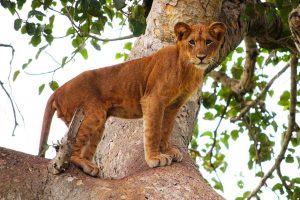
The country’s great ape attractions are particularly important. Bwindi Impenetrable National Park and Mgahinga Gorilla National Park provide opportunities to see endangered mountain gorillas, while Kibale Forest and other forests provide chimpanzee experiences.
Queen Elizabeth National Park, Murchison Falls National Park, Kidepo Valley National Park, Lake Mburo National Park and other protected areas provide different wildlife experiences.
Uganda is therefore a destination where a traveler can combine primate viewing, savannah wildlife and scenic landscapes in one trip.
Birds
Uganda is also one of Africa’s notable birdwatching destinations. The country has more than 1,000 recorded bird species, making it particularly attractive to birdwatchers and nature enthusiasts.
Birds can be found across Uganda’s forests, wetlands, lakes, savannahs and mountains. Some species are widespread while others are associated with particular habitats. The country’s wetlands and water bodies support numerous waterbirds, while forests contain forest specialists that may be difficult to find elsewhere.
The Albertine Rift is particularly important for bird conservation because it contains several species and subspecies with restricted ranges. Even travelers who are not dedicated birdwatchers can appreciate Uganda’s birdlife. Colorful species can often be seen during game drives, forest walks, boat cruises and even around lodges.
Cultures
As earlier noted, Uganda has a remarkable variety of cultures. Each region offers opportunities to learn about traditional food, music, dance, crafts, history and community life.
Visitors can explore Buganda culture around Kampala and central Uganda, experience the traditions of the Banyoro in western Uganda, learn about Tooro culture around Fort Portal, encounter the Bakiga and Batwa communities around southwestern Uganda, or explore the distinctive cultures of the Karamojong in northeastern Uganda.
Cultural tourism can be especially suitable for budget travelers because some experiences are community-based and do not require expensive park permits.
Activities for Uganda Budget Tours
For anyone traveling on a limited budget, Uganda still offers many opportunities to enjoy memorable experiences. The following activities can be incorporated into a budget itinerary depending on the destination and traveler’s interests.
Boat Cruises
Boat cruises are among the most enjoyable ways to experience Uganda’s water bodies. They are commonly undertaken on the Victoria Nile, particularly around Murchison Falls, and on lakes such as Lake Victoria, Lake Mburo and Lake Bunyonyi.
A boat trip allows visitors to experience Uganda from a different perspective. On wildlife cruises, travelers may see hippos, crocodiles, elephants and numerous waterbirds along the shoreline.
For budget travelers, shared boat trips can sometimes be more economical than arranging a private vessel. Travelers should compare prices and confirm what is included before booking.
The Nile around Jinja also provides opportunities for water-based adventures. Some activities, such as white-water rafting, are more expensive than a simple boat trip, but they offer a memorable experience for adventure travelers.
Food Tours
Uganda has a diverse food culture, and exploring local cuisine can be one of the simplest ways to understand the country.
Travelers can visit local restaurants, markets and food stalls to experience dishes such as matooke, posho, beans, groundnut sauce, chapati, Rolex, roasted meat and different types of local fish.
Food tours do not always require a large budget. In fact, eating at local restaurants can be considerably cheaper than relying exclusively on high-end tourist establishments.
A food experience also gives visitors the opportunity to learn about how Ugandan foods are prepared and the cultural importance attached to particular dishes. For a visitor interested in culture, a local food tour can therefore combine culinary discovery with social interaction.
Chimpanzee Trekking
Chimpanzee trekking is another important primate activity in Uganda. It can be less expensive than mountain gorilla trekking, although the exact price depends on the destination and current permit rates.
Chimpanzee experiences are available in places such as Kibale National Park, Kyambura Gorge in Queen Elizabeth National Park and Kalinzu Forest Reserve.
Kibale is especially well known for chimpanzee tracking and offers visitors the chance to explore a forest with a remarkable concentration of primates. In addition to chimpanzees, visitors may encounter red-tailed monkeys, black-and-white colobus monkeys, blue monkeys and other forest species.
Kyambura Gorge provides a different experience because visitors descend into a dramatic gorge within Queen Elizabeth National Park. The surrounding safari landscape means that a traveler can combine chimpanzee tracking with game drives and other activities.
Kalinzu Forest is another option for travelers interested in chimpanzees and forest exploration. It can be considered by visitors looking for alternatives depending on their itinerary and budget.
Cultural Expeditions
Cultural expeditions are another excellent choice for budget travelers. Uganda’s communities offer many opportunities to learn about traditional ways of life.
A cultural excursion can involve visiting a local community, exploring a traditional settlement, learning about local crafts, tasting traditional food, watching traditional dances or listening to stories about the history of the area. In Kampala, visitors can also combine cultural exploration with city tours and local market visits.
Boda boda tours can provide an interesting way of moving around some urban areas when conducted safely and through reputable guides. However, visitors should prioritize safety, use helmets and choose trustworthy operators rather than treating ordinary motorcycle transportation as a tourism activity without proper arrangements. Cultural tourism is valuable because it gives visitors a chance to meet people rather than simply passing through landscapes. It can also provide direct economic benefits to communities when properly organized.
Nature Walks
Nature walks are another activity that can fit well into a budget Uganda itinerary. Forests, wetlands, hills and community conservation areas provide opportunities for guided walks.
A nature walk can reveal details that are easily missed during a vehicle safari. Visitors can observe plants, butterflies, birds, insects, small mammals and other elements of the ecosystem. Some nature walks also provide beautiful views of lakes, mountains and countryside. Depending on the location, travelers may spend only a few hours walking rather than committing to an expensive full-day activity.
Hiking
Uganda’s mountains and hills provide opportunities for travelers who enjoy hiking. Not every hiking experience requires a multi-day expedition. Short hikes can be undertaken around places such as Fort Portal, Mount Elgon, Lake Bunyonyi, Mount Moroto and other scenic areas.
For travelers on a tight budget, day hikes can be particularly attractive because they reduce accommodation and equipment costs compared with longer mountain expeditions. The experience can also be combined with cultural encounters and local community tourism.
Exploring Local Markets
Local markets provide another affordable way of experiencing Uganda. Markets are often lively places where travelers can see fresh produce, clothing, crafts, spices and other everyday products.
Kampala and other towns have numerous markets, while smaller rural markets provide an opportunity to observe everyday life outside the main tourist centers. Visitors should always ask permission before photographing people, especially in sensitive or private situations, and should respect local customs.
Why Choose Budget Tours in Uganda?
A budget Uganda tour does not mean that a traveler has to miss everything the country has to offer. Instead, it involves making thoughtful choices about where to go, how to travel and which activities to prioritize.
Travelers can combine affordable cultural experiences with selected wildlife activities. They can choose mid-range or budget accommodation, eat at local restaurants, travel between destinations efficiently and select activities that offer good value for their interests.
Uganda’s diversity is particularly helpful in this regard. A traveler does not necessarily need to visit every national park or participate in the most expensive activities to experience the country.
Someone interested in nature can choose forest walks and hiking. A wildlife enthusiast can select a national park that fits their budget. A culture enthusiast can spend more time in communities and local markets, while an adventure traveler can focus on activities around Jinja or the mountains.
Conclusion
Uganda remains a destination of remarkable natural and cultural diversity. From the River Nile and Lake Victoria to the Rwenzori Mountains, tropical forests, savannah parks, crater lakes and wetlands, the country offers a wide variety of landscapes and experiences.
Its wildlife includes elephants, lions, leopards, giraffes, buffaloes, antelopes, hippos, chimpanzees and mountain gorillas, while its forests and wetlands support an extraordinary variety of bird species.
Beyond nature and wildlife, Uganda’s cultural diversity provides another reason to explore the country. The many communities, traditional institutions, cuisines, dances, crafts and historical traditions give travelers opportunities to experience Uganda beyond conventional sightseeing.
Most importantly, visitors do not need an unlimited budget to enjoy Uganda. Affordable activities such as local food experiences, cultural tours, nature walks, selected boat trips, hiking and some chimpanzee experiences can create memorable journeys.
The list of attractions and activities is certainly not exhaustive. From the busy streets of Kampala to the quiet forests of western Uganda and the dramatic landscapes of the northeast, there are countless experiences waiting for travelers.
For anyone planning a Uganda budget tour, careful planning can make it possible to experience the country’s wildlife, landscapes, culture and hospitality while keeping travel costs manageable. Uganda’s greatest attraction is its diversity, and that diversity means there is something for travelers with different interests and budgets.