Great Migration Safari Guide: Best Time, Routes, Costs & Where to Go
Our Great Migration Safari Guide explains everything you need to know about witnessing the annual wildebeest migration in Tanzania and Kenya, including the best time to visit, where to see river crossings, safari costs and recommended itineraries. Whether you dream of watching thousands of wildebeest crossing the Mara River or witnessing newborn calves on the southern Serengeti plains, choosing the right season and destination can transform your African safari experience.
The Great Wildebeest Migration is one of Africa’s most remarkable wildlife spectacles, involving approximately 1.5 million wildebeest alongside hundreds of thousands of zebras and gazelles. These animals move through the Serengeti–Maasai Mara ecosystem in search of fresh grass and water, creating extraordinary opportunities to observe predators, large herds, seasonal river crossings and wildlife behaviour.
However, the migration does not happen on a fixed schedule. Rainfall patterns, grazing conditions and seasonal movements determine where the herds gather throughout the year. Understanding these changes helps travellers choose between Tanzania’s Serengeti National Park and Kenya’s Maasai Mara National Reserve, while allowing enough time to experience the wildlife spectacle without relying on guaranteed sightings.
1. What Is the Great Wildebeest Migration?
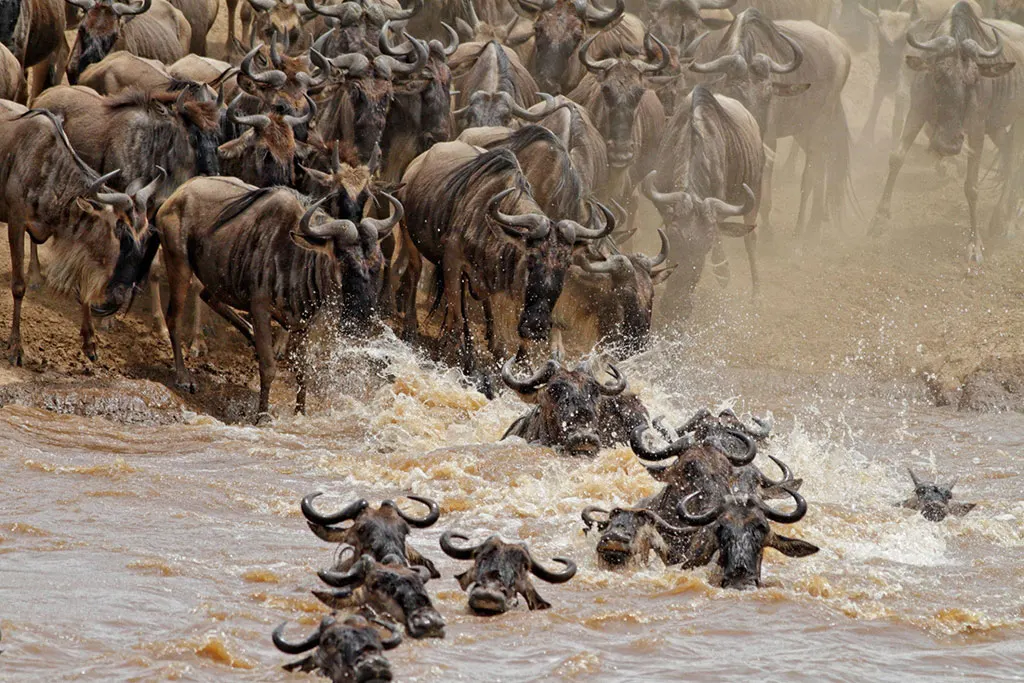
The Great Wildebeest Migration is the continuous seasonal movement of enormous herds of wildebeest, zebras and other grazing animals across the Serengeti ecosystem in northern Tanzania and the Maasai Mara in southwestern Kenya. Often described as one of the world’s greatest wildlife spectacles, this natural phenomenon follows seasonal rainfall and fresh grass growth rather than a fixed migration calendar.
Unlike animals that migrate along a simple one-way route, wildebeest move through a broad, roughly circular ecosystem. Their journey includes the southern Serengeti calving grounds, central Serengeti grasslands, Western Corridor, northern Serengeti and Maasai Mara. Along the way, predators such as lions, cheetahs, leopards, spotted hyenas and crocodiles take advantage of the seasonal concentration of prey.
Why Does the Great Migration Happen?
The migration primarily occurs because wildebeest depend on nutritious grass and reliable water sources. As seasonal rainfall changes the availability of grazing, the herds move towards areas offering better feeding conditions. The short-grass plains of the southern Serengeti provide important calving grounds, while northern regions become valuable grazing areas during other parts of the year.
This movement also supports the wider ecosystem. Migrating herbivores influence vegetation growth, redistribute nutrients and provide food for predators and scavengers. For safari visitors, understanding these ecological relationships makes the Great Migration much more meaningful than simply witnessing animals crossing a river.
How Many Animals Participate in the Great Migration?
Approximately 1.5 million wildebeest participate in the migration, accompanied by hundreds of thousands of zebras and smaller numbers of gazelles. Population estimates vary between surveys and years, but the scale of the movement makes it one of the world’s largest remaining terrestrial mammal migrations.
Zebras and wildebeest often graze in overlapping areas because they use grasslands differently, helping both species exploit available vegetation. Although they frequently travel together, their movements do not always match exactly. Large concentrations of grazing animals also attract predators, producing some of East Africa’s most exciting wildlife encounters.
2. Where Does the Great Migration Take Place?
The Great Migration takes place within the Serengeti–Maasai Mara ecosystem, which stretches across northern Tanzania and southwestern Kenya. Although both countries provide exceptional wildlife viewing, the best destination depends on your travel month and whether you want to experience wildebeest calving, large migrating herds or dramatic river crossings.
Serengeti National Park, Tanzania
Serengeti National Park is the principal destination for following the Great Migration because the herds spend much of their annual cycle within the wider Serengeti ecosystem. The park covers approximately 14,763 square kilometres and contains diverse habitats, including open grasslands, rocky kopjes, seasonal rivers and woodland. Different regions become important as rainfall and grazing conditions change.
The main migration areas include:
-
Southern Serengeti and Ndutu: Best known for wildebeest calving, especially from January to March, with February often providing particularly rewarding sightings.
-
Central Serengeti and Seronera: Excellent for year-round resident wildlife and seasonal movements of migrating herds.
-
Western Corridor and Grumeti: Important during the northward migration, particularly around May and June.
-
Northern Serengeti and Kogatende: Popular for Mara River crossing opportunities, generally from July to October.
Choosing accommodation in the correct Serengeti region is often more important than booking a famous lodge elsewhere in the park.
Maasai Mara National Reserve, Kenya
Maasai Mara National Reserve is one of Africa’s most famous safari destinations, particularly during the period when migrating wildebeest enter Kenya from northern Tanzania. The reserve offers extensive savannah landscapes, abundant resident wildlife and opportunities to observe dramatic crossings of the Mara River, usually during the July-to-October migration season.
Beyond the migration, the Maasai Mara supports lions, leopards, cheetahs, elephants, buffaloes, giraffes and numerous antelope species. Travellers can also explore nearby conservancies, where safari activities and accommodation arrangements differ from those inside the national reserve. Selecting the right location can reduce driving distances and improve the overall quality of your safari.
3. Best Time to See the Great Migration in Tanzania and Kenya
The best time to see the Great Migration depends on the wildlife experience you want rather than one universally perfect month. January and February are particularly rewarding for wildebeest calving in the southern Serengeti, while July through September generally offer strong opportunities for Mara River crossings in the northern Serengeti and Maasai Mara.
Great Migration Calendar by Month
| Month | Expected migration location | Main safari experience |
|---|---|---|
| January | Southern Serengeti and Ndutu | Calving begins and large herds gather |
| February | Ndutu and southern Serengeti | Peak calving and predator activity |
| March | Southern and central Serengeti | Calves, grazing herds and predator encounters |
| April | Central and southern Serengeti | Green-season wildlife and herd movement |
| May | Central Serengeti and Western Corridor | Northward movement and large herds |
| June | Western Corridor and Grumeti | Possible Grumeti River crossings |
| July | Northern Serengeti | Possible Mara River crossings |
| August | Northern Serengeti and Maasai Mara | Major crossing opportunities |
| September | Maasai Mara and northern Serengeti | Large herds and possible crossings |
| October | Maasai Mara and northern Serengeti | Late-season crossings and changing movements |
| November | Central Serengeti | Southward movement following rains |
| December | Central and southern Serengeti | Herds returning towards calving grounds |
These are typical seasonal patterns, not guaranteed herd locations. Rainfall can shift the timing of migration movements by several weeks.
January to March: Wildebeest Calving Season in Ndutu
January to March is one of the most rewarding periods for travellers interested in the wildebeest calving season. During this time, enormous herds gather across the short-grass plains of Ndutu and the southern Serengeti, where nutritious grazing supports pregnant females and newborn calves. February is often the main calving month, although the precise timing depends on seasonal rainfall.
Hundreds of thousands of wildebeest calves may be born over a relatively short period, attracting lions, cheetahs, hyenas and other predators. This concentration of wildlife makes Ndutu especially appealing to photographers and travellers interested in animal behaviour. Open grasslands provide excellent visibility, while green landscapes create a striking backdrop for game drives.
Best destination: Ndutu and southern Serengeti.
April to May: Green Season and Northward Migration
April and May generally coincide with the long rains across much of northern Tanzania. As fresh grass develops, migrating wildebeest begin spreading across the central Serengeti and gradually moving towards western and northern grazing areas. This period offers lush landscapes, dramatic skies and opportunities to observe herds without the peak-season visitor concentrations found in some popular areas.
However, wet conditions can make certain roads difficult to navigate, and some seasonal safari camps may close temporarily. Travellers planning a green-season migration safari should choose accommodation carefully and remain flexible. Although this is not the main Mara River crossing period, it can be rewarding for wildlife photography, birdwatching and travellers seeking a quieter safari.
Best destination: Central Serengeti and accessible migration areas.
May to June: Western Serengeti and Grumeti River Crossings
May and June are important months for the northward movement of wildebeest through the Serengeti’s Western Corridor. Large herds may gather around the Grumeti River and surrounding grasslands, where seasonal crossings create opportunities to observe animals navigating waterways inhabited by crocodiles. These movements form an important stage of the annual migration.
Grumeti crossings are less predictable than many safari advertisements suggest, and visitors should not expect animals to cross on demand. Nevertheless, the Western Corridor offers beautiful scenery, varied wildlife habitats and opportunities to witness substantial herd movements. Combining this region with central Serengeti can provide a more flexible safari during this transitional period.
Best destination: Western Serengeti and Grumeti region.
July to August: Mara River Crossings in Northern Serengeti
July and August are among the most popular months for a Great Migration safari because wildebeest may gather along the Mara River in northern Serengeti. Some herds cross towards Kenya’s Maasai Mara, while others remain in Tanzania or move repeatedly between grazing areas. These crossings are among the most dramatic wildlife encounters in Africa.
The experience requires patience because herds may gather for hours before entering the water, retreat unexpectedly or choose another crossing point. Crocodiles, strong currents and steep riverbanks create genuine hazards for the animals. Travellers hoping to witness crossings should spend several nights in the northern Serengeti rather than relying on a single game drive.
Best destination: Kogatende and northern Serengeti.
September to October: Maasai Mara Migration Safari
September and October can provide excellent opportunities to see large wildebeest herds in Kenya’s Maasai Mara and Tanzania’s northern Serengeti. During this period, animals may continue grazing in northern areas, cross the Mara River multiple times or gradually begin moving south as rainfall patterns change.
The Maasai Mara is especially attractive for travellers who want to combine migration viewing with exceptional resident wildlife. Lions, cheetahs, leopards and elephants can be seen throughout the ecosystem, making game drives rewarding even when river crossings do not occur. However, the precise migration location should guide your choice of accommodation.
Best destination: Maasai Mara and northern Serengeti.
November to December: Return to Southern Serengeti
November and December mark the general southward movement of migrating herds as seasonal rains encourage fresh grass growth across central and southern Tanzania. Large groups of wildebeest and zebras may travel through the Serengeti plains, creating excellent opportunities for wildlife photography and observing the migration away from the famous river crossing areas.
December can be particularly attractive for travellers combining a migration safari with Ngorongoro Crater, Tarangire National Park or a Zanzibar beach holiday. Although the animals are moving towards the southern calving grounds, their exact distribution varies with rainfall, making local migration information important when planning accommodation and game drives.
Best destination: Central and southern Serengeti.
4. Mara River Crossings: The Most Famous Great Migration Experience
Mara River crossings are among the most dramatic moments of the Great Wildebeest Migration. Thousands of wildebeest and zebras may gather along riverbanks before attempting to cross crocodile-inhabited waters. The animals face several challenges, including strong currents, steep banks and overcrowded crossing points, making each crossing unpredictable.
Although photographs often show enormous herds entering the river simultaneously, actual crossings vary considerably. Some involve relatively small groups, while others attract thousands of animals. Herds may approach the river repeatedly before turning away, and crossing events can happen at different locations throughout the season.
Where Can You See the Mara River Crossings?
The most popular locations for witnessing the Mara River crossings are the northern Serengeti around Kogatende in Tanzania and the Maasai Mara National Reserve in Kenya. Both destinations offer opportunities to observe wildebeest gathering near crossing points, although the location of the herds changes according to grazing conditions and seasonal rainfall.
Visitors should understand that staying near the Mara River does not guarantee a crossing. Experienced safari guides monitor wildlife movements and select suitable viewing areas, but nature ultimately determines when animals enter the water. Choosing accommodation within reasonable driving distance of potential crossing points can significantly improve the efficiency of your safari.
How to Improve Your Chances of Seeing a River Crossing
Travellers planning a Mara River crossing safari should allow sufficient time in the migration area and avoid itineraries that require long daily transfers. A stay of at least three nights is a sensible starting point, although additional days provide more opportunities to observe changing herd movements and other wildlife.
A knowledgeable guide can identify suitable locations, interpret animal behaviour and help you make the most of your time. However, responsible operators never guarantee river crossings or pressure wildlife to create photographic opportunities. Patience, flexibility and respect for park regulations remain essential parts of the experience.
5. Serengeti vs Maasai Mara: Which Is Better for the Great Migration?
Choosing between Serengeti National Park and Maasai Mara National Reserve is one of the most important decisions when planning a Great Migration safari. Both destinations belong to the same wider ecosystem, but they offer different seasonal advantages, accommodation choices and safari logistics.
| Safari feature | Serengeti, Tanzania | Maasai Mara, Kenya |
|---|---|---|
| Best overall advantage | Migration viewing across multiple seasons | Concentrated seasonal migration viewing |
| Wildebeest calving | Excellent in southern Serengeti | Not the main calving destination |
| River crossings | Grumeti and Mara rivers | Mara River |
| Main crossing season | Generally July–October in the north | Generally July–October |
| Year-round migration opportunities | Extensive | More seasonal |
| Popular starting point | Arusha or Kilimanjaro Airport | Nairobi |
| Safari combinations | Ngorongoro, Tarangire, Zanzibar | Amboseli, Lake Nakuru, Nairobi |
Why Choose Tanzania for a Great Migration Safari?
Tanzania is particularly suitable for travellers who want to follow different stages of the Great Migration throughout the year. The Serengeti provides access to calving grounds, central migration routes, the Western Corridor and northern river crossing areas, making it possible to design a safari around the expected herd movements.
Tanzania also offers excellent opportunities to combine migration viewing with Ngorongoro Crater, Tarangire National Park and other northern safari destinations. Travellers with longer holidays can include Zanzibar or Uganda’s mountain gorilla trekking experience, creating a broader East African wildlife itinerary.
Why Choose Kenya for a Great Migration Safari?
Kenya is especially attractive for travellers visiting between July and October who want to focus on the Maasai Mara and its famous river crossing opportunities. The reserve’s relatively compact wildlife viewing areas and established safari infrastructure make it a popular destination for both first-time safari travellers and experienced wildlife photographers.
A Kenya migration safari can also include Amboseli National Park, Lake Nakuru or other destinations. Travellers can begin and end their journey in Nairobi, using road transfers or domestic flights depending on their budget, available time and preferred accommodation standard.
6. How Much Does a Great Migration Safari Cost?
The cost of a Great Migration safari depends on travel dates, accommodation standards, safari duration, group size and whether you choose Tanzania, Kenya or both countries. Peak migration months often attract higher accommodation rates, particularly near popular Mara River crossing areas.
Illustrative planning estimates in USD per person, per day
| Safari category | Approximate daily budget |
|---|---|
| Budget safari | $250–$400 |
| Mid-range safari | $400–$700 |
| Luxury safari | $700–$1,200 |
| High-end luxury safari | $1,200+ |
These figures are broad planning estimates rather than confirmed quotations. They assume a shared safari arrangement or two travellers sharing certain costs; private departures, peak-season camps, park fees and domestic flights can change the final price substantially.
What Is Usually Included in a Great Migration Safari?
Most professionally organised migration safaris include accommodation, meals according to the agreed itinerary, park entry fees, game drives, a safari vehicle and services of an experienced guide. Some packages also include airport transfers, drinking water during game drives and domestic flights between major safari destinations.
However, inclusions vary between tour operators and accommodation categories. Travellers should check whether the quoted price covers conservation fees, internal flights, private guiding and transfers. International flights, travel insurance, visas, gratuities and optional activities are commonly excluded unless specifically mentioned in the itinerary.
How to Plan a More Affordable Migration Safari
Travellers looking for an affordable Great Migration safari should focus on accommodation location, travel dates and efficient routing rather than choosing the cheapest advertised package. Staying in an unsuitable area can increase driving time and reduce opportunities to observe migrating herds, even when the accommodation itself appears inexpensive.
Mid-range tented camps and carefully planned road safaris can provide excellent wildlife experiences without luxury pricing. Travelling with companions may reduce shared vehicle costs, while visiting outside the busiest months can improve accommodation value. Nevertheless, the best savings should not compromise your primary wildlife viewing objectives.
7. How Many Days Do You Need for a Great Migration Safari?
A successful Great Migration safari generally requires enough time to reach the appropriate wildlife area, explore different game viewing routes and accommodate unpredictable animal movements. Travellers focusing exclusively on the migration may need fewer days than those combining the Serengeti with Ngorongoro, Tarangire or Kenya’s Maasai Mara.
| Safari duration | Recommended experience |
|---|---|
| 3–4 days | Focused fly-in Serengeti or Maasai Mara safari |
| 5–6 days | Migration-focused safari with multiple game drives |
| 7–8 days | Serengeti migration and Ngorongoro Crater |
| 9–12 days | Serengeti, Ngorongoro and Tarangire |
| 12–16 days | Combined Kenya and Tanzania wildlife safari |
| 14–18 days | Great Migration and Uganda gorilla trekking |
Is a 3-Day Great Migration Safari Enough?
A three-day migration safari can provide rewarding wildlife viewing when travellers fly directly into an airstrip near the expected herd location. However, this short duration leaves limited flexibility if animals move away from the area or river crossings do not occur during the available game drives.
For travellers whose main goal is to witness the Mara River crossings, a longer stay is generally preferable. A five- or six-day itinerary can provide additional wildlife viewing opportunities while reducing the pressure to witness a particular event within a limited timeframe.
8. Best Great Migration Safari Itineraries
Choosing the right itinerary involves more than selecting famous national parks. A well-planned migration safari considers seasonal herd movements, distances between destinations, available flights and the amount of time travellers can spend on game drives. The following sample itineraries provide useful starting points for different travel interests and budgets.
5-Day Serengeti Great Migration Safari
This itinerary is suitable for travellers who want to concentrate on the Great Migration while spending several days exploring the Serengeti. The route can be adjusted to include Ndutu during calving season, the Western Corridor during northward migration or northern Serengeti during the Mara River crossing period.
Suggested itinerary:
-
Day 1: Arrival in Arusha and overnight accommodation.
-
Day 2: Transfer or fly to the appropriate Serengeti migration area.
-
Day 3: Full-day game drives following seasonal herd movements.
-
Day 4: Additional Serengeti wildlife viewing and photography.
-
Day 5: Return to Arusha or connect with your onward flight.
7-Day Serengeti Migration and Ngorongoro Safari
A seven-day Tanzania safari combines the Great Wildebeest Migration with the exceptional wildlife viewing opportunities of Ngorongoro Crater. This itinerary suits travellers who want to see migrating herds, big cats, elephants, buffaloes and other African wildlife while exploring two of northern Tanzania’s most famous safari destinations.
Suggested itinerary:
-
Day 1: Arrival in Arusha.
-
Day 2: Drive to Ngorongoro Conservation Area.
-
Day 3: Ngorongoro Crater game drive.
-
Day 4: Transfer to Serengeti National Park.
-
Day 5: Full-day migration-focused game drives.
-
Day 6: Additional Serengeti wildlife viewing.
-
Day 7: Return to Arusha by road or domestic flight.
The Serengeti accommodation area should be selected according to the migration season, and the route may require adjustment for northern Serengeti travel.
10-Day Tanzania Great Migration Safari
A ten-day Great Migration safari allows travellers to explore several of Tanzania’s most important wildlife destinations while spending meaningful time in the Serengeti. This itinerary can include Tarangire National Park, Ngorongoro Crater and selected Serengeti regions, providing opportunities to observe elephants, big cats, migrating wildebeest and diverse birdlife.
Suggested itinerary:
-
Days 1–2: Arrival in Arusha and Tarangire National Park.
-
Days 3–4: Ngorongoro Conservation Area and crater game drive.
-
Days 5–7: Central Serengeti wildlife viewing.
-
Days 8–9: Seasonal migration area, selected according to travel dates.
-
Day 10: Return to Arusha or onward destination.
14-Day Great Migration and Uganda Gorilla Trekking Safari
A combined Great Migration and Uganda gorilla trekking safari offers an exceptional opportunity to experience East Africa’s savannah wildlife and endangered mountain gorillas during one holiday. Travellers can explore the Serengeti or Maasai Mara before continuing to Uganda’s Bwindi Impenetrable National Park for a guided gorilla trekking experience.
A typical itinerary includes migration-focused game drives, visits to other wildlife destinations and a gorilla trek in Bwindi. Depending on the available time, travellers may also include chimpanzee tracking in Kibale National Park. Regional flight connections, gorilla permit availability and suitable accommodation should be confirmed before finalising the itinerary.
9. Where to Stay During the Great Migration
Choosing where to stay during the Great Migration is essential because the herds move through different regions throughout the year. Accommodation near the expected migration area can reduce daily driving distances, increase wildlife viewing time and improve the overall safari experience.
Best Places to Stay During Calving Season
Ndutu and the southern Serengeti are particularly suitable for travellers visiting during the wildebeest calving season, generally between January and March. Seasonal tented camps provide access to the short-grass plains, where large herds gather to give birth and graze. Some camps operate only during particular migration periods.
Accommodation options may include Ndutu Safari Lodge and seasonal tented camps such as Ndutu Under Canvas. Travellers should confirm the camp’s exact location, seasonal operating dates and access arrangements before booking, because the wider Ndutu region includes areas governed by different conservation and park regulations.
Best Places to Stay During River Crossing Season
Northern Serengeti camps around Kogatende and Lamai are popular during the Mara River crossing season. Their locations provide access to northern game viewing areas, although actual driving distances depend on road conditions, crossing points and the specific camp.
Examples include Sayari Camp, Lemala Kuria Hills Lodge and selected seasonal migration camps. In Kenya, travellers may consider accommodation within the Maasai Mara National Reserve or nearby conservancies, depending on preferred activities and access arrangements. Peak-season accommodation should be reserved early because popular properties can reach capacity months in advance.
Mobile Camps vs Permanent Safari Lodges
Mobile safari camps can be particularly useful for following the Great Migration because some relocate between seasonal wildlife areas. These camps offer a wilderness atmosphere and may position travellers closer to expected herd movements, although the quality of facilities varies according to the accommodation category.
Permanent lodges provide established facilities and a consistent base for exploring a particular region. Both accommodation styles can deliver excellent safari experiences. The most important consideration is whether the camp’s actual location during your travel dates supports the wildlife experience you want.
10. How to Get to the Serengeti and Maasai Mara
Travellers planning a Great Migration safari can reach the Serengeti and Maasai Mara through international airports, domestic flights and road transfers. The most suitable route depends on the destination, safari duration, accommodation location and whether the itinerary includes other East African national parks.
Getting to Serengeti National Park
Most international visitors travelling to northern Tanzania arrive through Kilimanjaro International Airport or connect through another Tanzanian airport before reaching Arusha. From Arusha, travellers can drive to the Serengeti through Ngorongoro Conservation Area or take a scheduled domestic flight to an airstrip serving their chosen migration region.
Common Serengeti airstrips include Seronera, Kogatende and other seasonal access points. Flying can reduce travel time significantly, especially when visiting northern Serengeti. Road safaris remain attractive for travellers who want to explore Ngorongoro Crater, Tarangire and the landscapes of northern Tanzania along the way.
Getting to Maasai Mara National Reserve
Most Maasai Mara safaris begin in Nairobi, Kenya’s main international gateway. Travellers can reach the reserve by road or take domestic flights from Nairobi’s Wilson Airport to airstrips serving the Maasai Mara and surrounding conservancies.
Road transfers generally take several hours, depending on the departure point, road conditions and camp location. Domestic flights offer a convenient alternative for shorter itineraries, although baggage restrictions may apply. Travellers combining the Maasai Mara with the Serengeti should arrange cross-border transfers and flights carefully because the two destinations do not operate as one unrestricted safari area.
11. Can You Combine the Great Migration with Other African Safaris?
A Great Migration safari can be combined with several other East African destinations, allowing travellers to experience different landscapes, wildlife species and cultural attractions. The most suitable combination depends on travel dates, available time, regional flight connections and personal interests.
Great Migration and Ngorongoro Crater
Ngorongoro Crater is one of Tanzania’s most popular wildlife destinations and an excellent addition to a Serengeti migration safari. The crater supports elephants, lions, buffaloes, hippos and a range of antelope species, while black rhinos may also be seen. Its compact wildlife viewing area contrasts with the vast plains of the Serengeti.
Great Migration and Tarangire National Park
Tarangire National Park is famous for its elephants, baobab trees and seasonal wildlife concentrations along the Tarangire River. The park provides a different safari experience from the Serengeti, especially during the dry season when animals gather around permanent water sources. It is a rewarding addition to longer northern Tanzania itineraries.
Great Migration and Zanzibar Beach Holiday
Travellers can combine the Great Migration with a relaxing holiday on Zanzibar’s Indian Ocean beaches. After exploring the Serengeti and other northern Tanzania parks, visitors can fly to Zanzibar for swimming, snorkelling, cultural excursions and visits to historic Stone Town. This combination is particularly popular among honeymooners and travellers seeking both adventure and relaxation.
Great Migration and Uganda Gorilla Trekking
Combining the Great Migration with mountain gorilla trekking in Uganda creates a distinctive East African wildlife holiday. Travellers can witness migrating wildebeest in Tanzania or Kenya before travelling to Bwindi Impenetrable National Park, where guided treks provide opportunities to observe habituated mountain gorilla families in their natural forest habitat.
Epic Uganda Vacation can help coordinate safari logistics, regional flights, gorilla permits and accommodation across the destinations. Travellers with additional time may also include chimpanzee trekking in Kibale National Park, creating an itinerary that combines savannah wildlife, primates and different East African ecosystems.
12. What Wildlife Can You See During the Great Migration?
Although wildebeest are the principal attraction, the Great Migration offers opportunities to observe a remarkable diversity of African wildlife. The Serengeti and Maasai Mara support resident predators, grazing mammals, birds and smaller animals throughout the year, making both destinations rewarding even when migrating herds are concentrated elsewhere.
Common wildlife sightings include wildebeest, zebras, Thomson’s gazelles, lions, cheetahs, leopards, spotted hyenas, elephants, buffaloes and giraffes. Crocodiles inhabit the major rivers, while hippos are commonly associated with permanent water sources. Birdwatchers can also encounter vultures, eagles, secretary birds, ostriches and many other species across the ecosystem.
Predator Activity During the Great Migration
Predators play an important role in the Great Migration ecosystem because the concentration of grazing animals creates feeding opportunities. Lions, cheetahs and hyenas may hunt wildebeest calves or other vulnerable animals, particularly during the calving season when large numbers of newborn animals are present.
River crossings can also attract crocodiles and scavenging birds, although successful hunts and predator encounters are never guaranteed. For wildlife photographers, the migration provides opportunities to observe natural behaviour, including hunting strategies, maternal care, herd movements and interactions between predators and prey.
13. What to Pack for a Great Migration Safari
Packing correctly helps travellers remain comfortable during early morning game drives, warm afternoons and changing weather conditions. Temperatures can vary considerably between the Serengeti plains, Ngorongoro highlands and Maasai Mara, making layered clothing particularly useful throughout the year.
Recommended safari essentials include:
-
Lightweight, neutral-coloured clothing for daytime game drives.
-
A warm jacket or fleece for early mornings and evenings.
-
Comfortable walking shoes and a sun hat.
-
Sunglasses, sunscreen and insect repellent.
-
Binoculars for observing distant wildlife.
-
A camera with a suitable telephoto or zoom lens.
-
Spare batteries, charging equipment and travel adapters.
-
Personal medication and a reusable water bottle.
Travellers using light aircraft should confirm baggage allowances before departure, as many safari flights impose strict weight and luggage restrictions.
14. Responsible Tourism During the Great Migration
Responsible wildlife tourism helps protect the Serengeti–Maasai Mara ecosystem and the animals that depend on its seasonal grazing areas. Visitors should follow park regulations, maintain appropriate distances from wildlife and avoid activities that disturb animals during sensitive moments such as calving or river crossings.
Safari vehicles should not block migration routes, crowd animals at riverbanks or drive off designated tracks where prohibited. Travellers should choose experienced guides and responsible operators who prioritise wildlife welfare, conservation and respect for local communities. The goal of a Great Migration safari should be to observe natural behaviour without interfering with the animals’ movements.
15. Frequently Asked Questions About the Great Migration Safari
What Is the Best Month to See the Great Migration?
The best month depends on the migration experience you want. February is particularly rewarding for wildebeest calving in Ndutu and the southern Serengeti, while July, August and September generally provide excellent opportunities for Mara River crossings in northern Serengeti and Maasai Mara. However, rainfall influences herd movements, so no specific month guarantees a particular wildlife event.
Is the Great Migration Better in Kenya or Tanzania?
Tanzania is generally better for travellers who want to experience different stages of the Great Migration throughout the year, including calving season and northward herd movements. Kenya’s Maasai Mara is particularly popular during the July-to-October migration period. The better destination depends on your travel dates, preferred wildlife experiences, budget and whether you want to combine the migration with other attractions.
When Is the Great Migration in Serengeti?
The Great Migration occurs within the Serengeti ecosystem throughout the year, although the animals move between different regions. Southern Serengeti is particularly important during calving season, while the Western Corridor becomes relevant during the northward migration. Northern Serengeti is popular between July and October for Mara River crossing opportunities. Rainfall and grazing conditions determine the exact location of the herds.
When Is the Great Migration in Maasai Mara?
The Great Migration typically reaches Kenya’s Maasai Mara during the middle of the year, with July through October being the main period for visiting migrating herds. August and September are especially popular for river crossing opportunities. However, wildebeest movements vary between years, and some herds may arrive earlier, remain longer or return to Tanzania depending on rainfall and grazing conditions.
Can You See the Great Migration Throughout the Year?
Yes. The Great Migration is a continuous natural cycle rather than a single seasonal event. Travellers can observe different stages throughout the year, including calving in southern Serengeti, northward movements through central and western areas, river crossing opportunities in northern Serengeti and Maasai Mara, and the return towards southern Tanzania. The experience changes according to the season.
Are Mara River Crossings Guaranteed?
No. Mara River crossings are unpredictable wildlife events influenced by animal behaviour, grazing conditions and environmental factors. Wildebeest may gather along the riverbanks for hours without crossing, or they may cross unexpectedly at different locations. Spending several nights in a suitable migration area and travelling with an experienced guide can improve viewing opportunities, but no responsible safari operator can guarantee a crossing.
How Much Does a Great Migration Safari Cost?
Great Migration safari costs vary according to destination, season, accommodation standard, itinerary length and transport arrangements. Budget safaris generally cost less than private luxury or fly-in safaris, while peak-season camps near popular migration areas can be expensive. Travellers should request a personalised quotation that clearly identifies accommodation, park fees, guiding, transport, meals and other included services.
How Many Days Are Enough for a Great Migration Safari?
Five to seven days can provide a rewarding Great Migration safari, particularly when accommodation is selected close to the expected herd location. Shorter fly-in itineraries are possible, but they offer less flexibility if wildlife movements change. Travellers combining the Serengeti with Ngorongoro, Tarangire or Maasai Mara should consider longer itineraries to allow sufficient time for game drives and transfers.
Is the Great Migration Suitable for Families with Children?
Yes. The Great Migration can be an excellent family safari experience when accommodation, travel distances and game-drive schedules suit the children’s ages. Many safari lodges welcome families, although some camps have minimum-age restrictions or specific rules for younger guests. Families should choose suitable accommodation and consider shorter game drives, private vehicles and flexible daily schedules.
What Is the Difference Between Wildebeest Calving and River Crossing Season?
Wildebeest calving season generally occurs from January to March, particularly around February, when large numbers of calves are born in the southern Serengeti and Ndutu region. River crossing season usually occurs between July and October in northern Serengeti and Maasai Mara. Calving offers opportunities to observe newborn animals and predator activity, while river crossing season focuses on dramatic herd movements across waterways.
How Far in Advance Should I Book a Great Migration Safari?
Travellers planning a Great Migration safari during July, August or September should ideally book approximately six to twelve months in advance, especially when requesting popular camps near river crossing areas. Luxury accommodation and specialised photographic safaris may require even earlier reservations. Booking ahead also provides more flexibility when selecting suitable camps, guides and domestic flight arrangements.
Can I Combine the Great Migration with Gorilla Trekking in Uganda?
Yes. A Great Migration safari in Tanzania or Kenya can be combined with mountain gorilla trekking in Uganda’s Bwindi Impenetrable National Park. This combination allows travellers to experience both Africa’s famous savannah wildlife and endangered mountain gorillas. The itinerary should account for regional flight connections, gorilla trekking permit availability, accommodation and sufficient time for travel between destinations.
16. Plan Your Great Migration Safari with Epic Uganda Vacation
The Great Migration offers unforgettable wildlife encounters throughout the year, from wildebeest calving in southern Serengeti to dramatic Mara River crossings in northern Tanzania and Kenya’s Maasai Mara. Choosing the right destination, season and accommodation can make a significant difference to your safari experience.
At Epic Uganda Vacation, we organise personalised Great Migration safaris in Tanzania and Kenya, including opportunities to combine the Serengeti or Maasai Mara with Uganda gorilla trekking, chimpanzee tracking and other East African wildlife experiences.
Share your preferred travel dates, number of travellers, accommodation preferences and the wildlife experiences you hope to enjoy. Our safari team will help design a suitable itinerary around your interests and the expected seasonal movements of the herds.
Contact Great Apes Tours Africa to plan your Great Migration safari