Gorilla Families in Rwanda and Uganda
Everything you must know about gorilla families in Rwanda and Uganda. Bwindi Impenetrable National Park and Mgahinga Gorilla National Park are two of Uganda’s most important destinations for mountain gorilla trekking. Together, they form part of the wider mountain gorilla conservation landscape shared with Rwanda and the Democratic Republic of Congo. Bwindi is particularly important because it protects roughly half of the world’s remaining mountain gorillas, while Mgahinga forms part of the Virunga Massif, where mountain gorillas move naturally across international borders.
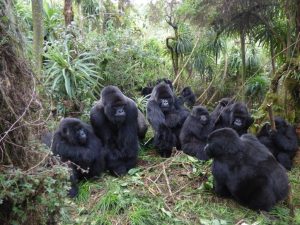
Uganda’s mountain gorillas belong to the subspecies Gorilla beringei beringei, commonly known as the mountain gorilla. The species is classified as Endangered, and decades of protection, veterinary care, scientific research, community involvement and carefully managed tourism have contributed to the recovery of the population.
The Virunga Massif (Home of Gorillas)
Gorilla trekking in Uganda takes place in four sectors of Bwindi Impenetrable National Park: Buhoma, Ruhija, Rushaga and Nkuringo. Mgahinga Gorilla National Park provides another trekking option, although the gorilla family situation there is different because groups in the Virunga Massif naturally move across Uganda, Rwanda and the Democratic Republic of Congo.
Uganda currently has more than 20 habituated gorilla groups associated with Bwindi that can be encountered through tourism, while additional groups are monitored for research and conservation purposes. The exact number of families and their membership can change over time as groups split, merge, lose members, gain infants or change their ranging patterns.
The most recent Bwindi-Sarambwe mountain gorilla census was carried out in 2025, with the results being processed after the fieldwork. The previous census recorded 459 mountain gorillas in the Bwindi-Sarambwe ecosystem in 2018. Uganda Wildlife Authority’s 2026 State of Wildlife Resources report notes that the new census has been completed and that the updated population estimate is being analysed. This means older articles quoting 459 as Uganda’s current total should be understood as the last fully verified census figure rather than a final 2026 population figure.
Gorilla Groups in Rushaga Sector
Rushaga is one of the most important gorilla trekking sectors in southern Bwindi. It is also the main sector for Uganda’s Gorilla Habituation Experience, which gives visitors an opportunity to spend considerably more time observing gorillas that are still undergoing the process of becoming accustomed to human presence. Rushaga has several habituated groups, and the family situation continues to change as new groups develop and older groups change composition.
Nshongi Gorilla Family
The Nshongi Gorilla Family is one of the best-known groups in the Rushaga sector. It takes its name from the Nshongi River, an important geographical feature in the area where the group was originally observed.
Nshongi became famous because it was once an exceptionally large group. At one point, it contained more than 30 individuals and several silverbacks. Some of the gorillas that later formed other families, including Bweza and Mishaya, originally belonged to the Nshongi group.
The group therefore provides an excellent example of how gorilla societies change naturally. Large gorilla groups can divide when social relationships, reproduction, competition and the number of mature males create conditions for a split. Nshongi remains one of the established gorilla families associated with Rushaga, although its membership today is considerably different from the numbers reported in older tourism articles.
Busingye Gorilla Family
The Busingye Gorilla Family is another well-known Rushaga group. The name Busingye means “peace” in the local language, and the group became established after a silverback separated from the Kahungye family.
Busingye is an interesting family for visitors because it demonstrates how gorilla groups can be formed through natural social changes. A silverback may leave or separate from an existing group and gradually establish his own following. Females and younger gorillas may then join the new group over time. The family continues to be monitored by trackers and rangers, and its membership changes as gorillas mature, reproduce and move between groups.
Bweza Gorilla Family
The Bweza Gorilla Family originated from the Nshongi group and is one of the most recognizable families in Rushaga. Bweza was once a member of the large Nshongi family before establishing his own group.
The close relationship between Bweza and Nshongi makes this family particularly interesting to people who want to understand gorilla social dynamics. Gorilla groups do not behave like completely isolated communities. They may encounter neighbouring groups, interact with one another and experience changes in membership over time. Bweza remains one of the established tourism families in Rushaga.
Kahungye Gorilla Family
Kahungye is an important addition to any updated list of Rushaga gorilla families. Older tourism articles sometimes omit Kahungye or give it a different status because gorilla family rosters change as groups split and new tourism groups are established. The Kahungye family has played an important role in the history of several Rushaga groups, including Busingye. Like other mountain gorilla families, its composition has changed over the years because of natural births, deaths, movement of individuals and social restructuring.
Kutu Gorilla Family
The Kutu Gorilla Family is associated with the Rushaga sector and has been one of the groups connected with gorilla habituation and tourism development in the area. Older descriptions sometimes give a much smaller membership for Kutu. Current conservation records list a larger group, illustrating why family numbers should not be treated as permanent. Gorilla families are dynamic social units, and a group that contains only a few members at one point may become considerably larger after births and changes in membership. Kutu is also important for visitors interested in the continuing habituation and monitoring of gorillas in southern Bwindi.
Bikingi Gorilla Family
The Bikingi Gorilla Family is another Rushaga group with an interesting history. It developed from gorillas associated with the former Mishaya group and other individuals that were living without a stable habituated family. Bikingi underwent a prolonged habituation process before becoming available for tourism. The process involved trackers and researchers gradually following the gorillas and allowing them to become accustomed to human presence. Bikingi is now one of the established gorilla families associated with the Rushaga area. Its history shows why habituation requires patience and why the process is important for both tourism and conservation.
Mucunguzi Gorilla Family
The Mucunguzi Gorilla Family is one of the newer and increasingly recognized families in Rushaga. The name Mucunguzi is associated with the meaning “saviour” in the local language. Mucunguzi was formed after a silverback separated from another family and established his own group. The family subsequently underwent habituation and became part of the gorilla tourism experience.
Current conservation information lists Mucunguzi with around 15 members, although the number can change as the group experiences births, deaths and other social changes. The family is particularly interesting to visitors who want to experience a newer gorilla group rather than focusing only on the oldest and most famous families.
Mishaya Gorilla Family
The Mishaya Gorilla Family was named after the silverback Mishaya, who separated from the Nshongi family. The group developed its own identity after the split and became one of the recognized families in Rushaga. Mishaya’s history is an example of the strong social and competitive relationships that exist between gorilla groups. Silverbacks may compete for access to females and territory, and these interactions can result in individuals leaving established groups. The family is currently much smaller than some of the large groups described in older articles. Conservation records list Mishaya among the habituated Bwindi families, but its membership continues to change naturally.
Gorilla Families in Buhoma Sector
Buhoma is the historic centre of gorilla tourism in Uganda. It is located on the northern side of Bwindi Impenetrable National Park and was the first area of Bwindi where gorilla trekking was opened to tourists. Today, Buhoma has several habituated families, and it remains one of the most popular starting points for gorilla trekking in Uganda.
Rushegura Gorilla Family
The Rushegura Gorilla Family is one of the famous groups of Buhoma. It was formed following a split from the Habinyanja group and became one of the established tourism families in the sector. Rushegura has historically been associated with a relatively calm social environment, although it is important not to describe any wild gorilla family as permanently peaceful or predictable. Gorilla behaviour changes according to circumstances, relationships, food availability and interactions with other groups. The family continues to be monitored and is available for standard gorilla trekking.
Habinyanja Gorilla Family
Habinyanja is one of the historic gorilla families of Buhoma. The group was habituated during the early development of gorilla tourism in Bwindi and has undergone several changes in leadership and membership. The family has also played an important role in the history of the Rushegura group because the latter was formed following a split from Habinyanja. Today, Habinyanja remains one of the recognized gorilla families in Buhoma. Its composition is smaller than some of the figures commonly quoted in older articles, demonstrating again that gorilla family numbers should be regularly updated.
Katwe Gorilla Family
Katwe is a relatively small gorilla family in the Buhoma sector. It became available for tourism after undergoing habituation and has since become one of the groups trekked by visitors in northern Bwindi. The group has experienced natural changes in its composition, including births and changes among adult males and females. Small groups such as Katwe can offer visitors an interesting opportunity to observe the close social relationships between individual gorillas.
Mubare Gorilla Family
Mubare is one of the most historically important gorilla families in Uganda. It was the first gorilla group to be habituated for tourism in Bwindi, and gorilla trekking in the Buhoma area officially began with the Mubare group in 1993. The family is closely associated with the legendary silverback Ruhondeza, who led the group for many years. Ruhondeza became one of Bwindi’s best-known gorillas and was respected for protecting his group. After his death in 2012, the group went through further leadership changes and social difficulties. These events illustrate the importance of silverbacks in maintaining group cohesion and defending members against outside threats. Mubare remains a tourism family, although its present membership is much smaller than the numbers sometimes quoted in older articles.
Muyambi Gorilla Family
Muyambi is one of the newer tourism families in Buhoma. It developed after members separated from the Mubare group and established a new social unit. The family is now recognized as one of the habituated groups available for tourism. Current conservation records list approximately seven members, although this number can change. Muyambi demonstrates how new tourism groups can develop naturally as gorilla societies change. The establishment of new groups also helps distribute trekking pressure among several families rather than concentrating all visitors on a small number of groups.
Binyindo Gorilla Family
Binyindo is one of the newer gorilla families associated with Buhoma and should be included in an updated list of Buhoma groups. The family was monitored for several years before being opened to tourism. It was named after its leading silverback, whose distinctive facial and nasal features inspired the name. The group was composed of a silverback, adult females, juveniles and an infant when it was documented during its early tourism period. Current conservation records continue to recognize Binyindo as a habituated Buhoma family.
Gorilla Families in Ruhija Sector
Ruhija is located in the eastern part of Bwindi and is one of Uganda’s most popular gorilla trekking sectors. The area is also important for primate research, particularly because some gorilla groups have been followed by researchers for many years.
Kyagurilo Gorilla Family
The Kyagurilo Gorilla Family is one of the most important research groups in Bwindi. Unlike tourism groups that are primarily visited by trekkers, Kyagurilo has historically been associated with scientific research and long-term monitoring. The group has contributed valuable information about gorilla behaviour, social relationships, ecology and population dynamics. The name is sometimes written as Kyaguriro or Kyaguliro in different sources, so website content should use one spelling consistently while recognizing that alternative spellings exist.
Mukiza Gorilla Family
The Mukiza Gorilla Family was formed following the division of the Kyagurilo group. The group was established in 2016 and is named after its leading silverback, Mukiza. Mukiza is particularly important for scientific research and has been closely monitored by researchers interested in mountain gorilla behaviour and ecology. The family spends considerable time in the interior of the forest, making it an interesting example of how the movements of gorillas can differ even between neighbouring groups.Current conservation records list approximately 19 members, although the composition of the group continues to change.
Oruzogo Gorilla Family
The Oruzogo Gorilla Family is one of the best-known groups in Ruhija. It has historically been a relatively large family and is particularly famous because twins have been born within the group. Gorilla twins are relatively uncommon, which makes such births significant for researchers, conservationists and visitors. The presence of infants and juveniles can also make a trek particularly interesting because younger gorillas are often active and playful. The Oruzogo group remains one of the established tourism families in Ruhija.
Bitukura Gorilla Family
Bitukura is another famous Ruhija family. Its habituation began in 2006, and the group became well known for its relatively tolerant multi-male social structure. The family has historically contained several adult males, demonstrating that gorilla groups do not always consist of a single silverback. Multiple adult males can coexist in the same group, depending on their relationships and social circumstances. Bitukura continues to be available for gorilla trekking and remains one of the most recognized groups in the Ruhija sector.
Gorilla Families in Nkuringo Sector
Nkuringo is located in the southern part of Bwindi and is known for its spectacular landscapes, steep hills and challenging trekking conditions. The word Nkuringo is associated with “round hills,” reflecting the landscape surrounding the sector. The sector has four established tourism families: Nkuringo, Bushaho, Christmas and Posho.
Nkuringo Gorilla Family
The Nkuringo Gorilla Family is the original tourism group of the Nkuringo sector. It was habituated and opened for tourism in 2004. The group takes its name from the former dominant silverback Nkuringo, who died in 2004. The family has continued to survive and change under new leadership. Nkuringo trekking is often considered physically demanding because the sector is characterized by steep terrain and high elevations. However, the difficulty varies depending on where the gorillas are located on the day of trekking.
Christmas Gorilla Family
The Christmas Gorilla Family is one of the newer tourism groups in Nkuringo. It is named after its dominant silverback, Christmas. The group has developed into an established tourism family and provides an additional option for visitors trekking from the southern sector of Bwindi. As with all gorilla families, the number of individuals in Christmas changes over time. Current conservation records list the group with fewer members than some older articles reported, showing the importance of updating website information regularly.
Bushaho Gorilla Family
Bushaho is another well-known Nkuringo group. It is led by silverback Bahati and developed after several gorillas dispersed from the Nkuringo family. The group was subsequently monitored and habituated, eventually becoming a tourism family. Some of its members originally came from Nkuringo, while others joined from less habituated groups. Bushaho is an excellent example of how gorilla families can emerge through natural dispersal and social restructuring rather than being artificially created for tourism.
Posho Gorilla Family
The Posho Gorilla Family is one of the newer groups associated with Nkuringo. It is led by silverback Magara. The name Posho comes from the maize meal that trackers commonly used during the group’s habituation period. The family underwent habituation before being incorporated into the tourism experience. Current conservation records list approximately 17 members, making it considerably larger than the numbers sometimes quoted in older articles. The group remains an important part of the expanding gorilla tourism experience in Nkuringo.
Gorilla Family in Mgahinga Gorilla National Park
Nyakagezi Gorilla Family
Nyakagezi is the best-known habituated gorilla family in Mgahinga Gorilla National Park and remains the principal group associated with gorilla trekking in the park. The family has a remarkable history of moving across the borders of Uganda, Rwanda and the Democratic Republic of Congo. This is not unusual in the Virunga Massif because mountain gorillas do not recognize international boundaries. Their movements are influenced by food availability, interactions with other groups, reproduction and territorial dynamics.
Although Nyakagezi has historically moved between the three countries, it has spent substantial periods in Uganda and remains associated with Mgahinga’s gorilla tourism experience. Current conservation information lists Nyakagezi as a habituated group with a small number of members and several silverbacks. Its membership and leadership can change, so travellers should not rely on old descriptions of the group.
The history of Nyakagezi also demonstrates why the three countries must cooperate in protecting mountain gorillas. Uganda’s Mgahinga, Rwanda’s Volcanoes National Park and the Democratic Republic of Congo’s Virunga National Park form part of one interconnected mountain gorilla ecosystem.
Why Gorilla Family Numbers Keep Changing
One of the most important things to understand when writing about gorilla families is that their membership is never completely fixed. A family can gain infants, lose older individuals, experience changes in leadership or split into two groups.
Large groups may eventually divide when their population becomes very large or when social relationships change. The recent split of Rwanda’s Igisha group provides a good example. In 2025, a silverback named Humura left the group with a large number of individuals, creating two independently monitored groups. This demonstrates how quickly the list of gorilla families can change. For this reason, numbers such as “10 members,” “15 members” or “20 members” should always be treated as a snapshot rather than a permanent figure.
Gorilla Families and the Habituation Process
Not every gorilla group in Bwindi is open to ordinary tourists. Some groups remain wild and are monitored for scientific and conservation purposes, while others are gradually habituated to human presence. Habituation is a long and careful process in which trackers and researchers gradually spend time near gorillas while following strict protocols. The objective is not to domesticate the animals but to help them tolerate the presence of people without changing their natural behaviour significantly.
Uganda also offers the Gorilla Habituation Experience in the Rushaga sector. This activity provides a longer and more immersive encounter with gorillas that are still undergoing habituation. Visitors participating in habituation must follow specific rules designed to protect both people and gorillas.
Gorilla Trekking in Uganda
Gorilla trekking in Uganda is currently conducted in Bwindi Impenetrable National Park and Mgahinga Gorilla National Park. UWA notes that a trek can take roughly two to seven hours depending on the location of the gorilla family, terrain and movements of the animals. Visitors normally spend up to one hour observing a fully habituated group once they locate it.
The exact family a visitor will see is generally determined by the park authorities and tracking arrangements rather than being guaranteed by the tour operator. This is important because gorilla groups move through the forest, and their location can change from day to day.
The trek itself can involve steep slopes, thick vegetation, muddy trails and changing weather conditions. Visitors should therefore prepare with suitable hiking shoes, long trousers, waterproof clothing, drinking water and other appropriate trekking equipment.
Conservation of Uganda’s Gorilla Families
The protection of Uganda’s gorilla families involves much more than tourism. Rangers monitor gorillas daily, researchers study their behaviour and population dynamics, veterinarians provide medical care when necessary, and conservation organizations support health monitoring and community programmes.
Tourism provides important financial support for conservation and contributes to local economies around Bwindi and Mgahinga. Communities living around the parks also benefit through employment, guiding, porter services, accommodation, crafts and tourism-related businesses.
Mountain gorillas remain vulnerable to disease, habitat pressure, snares, human-wildlife conflict and other threats. Because gorillas share many biological characteristics with humans, diseases can potentially move between people and gorillas. Visitors are therefore required to follow strict health and viewing rules.
The 2025 Bwindi-Sarambwe census was particularly important because it provides updated scientific information about the mountain gorilla population and the condition of the wider ecosystem. Uganda Wildlife Authority reported in 2026 that the new gorilla census had been completed and that the data were still being analysed.
Gorilla Families in Rwanda’s Volcanoes National Park
Although the main focus of this article is Uganda, Rwanda is another major mountain gorilla trekking destination and is part of the same Virunga ecosystem that includes Mgahinga. Older information commonly describe 13 habituated gorilla families in Volcanoes National Park. However, the family list has changed in recent years as groups have split and new groups have been recognized.
The International Gorilla Conservation Programme’s current family records include groups such as Sabyinyo, Susa, Amahoro, Agashya, Kwitonda, Karisimbi, Isimbi, Noheli, Kwisanga, Muhoza, Kigoma and Igisha. Following the split of Igisha, the new Humura group is also recognized separately.
Sabyinyo Gorilla Family
The Sabyinyo family takes its name from Mount Sabyinyo, one of the volcanoes of the Virunga range. It is one of Rwanda’s historic gorilla families and has long been associated with the area around the park headquarters. Its relatively accessible location has historically made it a popular group for trekking, although the exact location of any gorilla family can change and no trek should be considered physically effortless simply because a group is sometimes found closer to the park headquarters.
Susa Gorilla Family
Susa is one of Rwanda’s most famous gorilla families because of its long association with Dian Fossey’s research and the history of gorilla conservation in the Virunga Mountains. The group became internationally recognized through the work of Dian Fossey and the later popularity of Gorillas in the Mist. Susa has also experienced changes in size and social structure over the years, including group divisions. Current conservation records continue to recognize Susa as one of the important habituated families in Volcanoes National Park.
Karisimbi Gorilla Family
The Karisimbi group is associated with the slopes of Mount Karisimbi, the highest of the Virunga volcanoes. Its location can sometimes make trekking more demanding because the gorillas may range at high elevations. The group has historically been associated with the wider Karisoke research area and has contributed to the long history of gorilla monitoring in Rwanda.
Umubano Gorilla Family
Umubano was formed after a silverback separated from the Amahoro family. The name Umubano means “living together” and reflects the group’s history and relationships with neighbouring gorillas. The family has remained one of the recognizable groups in Volcanoes National Park and demonstrates how gorilla groups can form naturally through social changes.
Amahoro Gorilla Family
Amahoro means “peace” in Kinyarwanda, and the family has historically been described as relatively calm. It is associated with the slopes of Mount Bisoke and has become a popular group for visitors. However, gorilla behaviour should never be reduced to a simple personality label. Every family contains individuals with different temperaments, and interactions can change according to circumstances.
Kwitonda Gorilla Family
The Kwitonda family has an important connection with the Democratic Republic of Congo because the group originated from the wider Virunga landscape. Kwitonda means “humble one” in Kinyarwanda. The family has experienced changes in membership and has also contributed to the formation of other groups, including Kwisanga.
Hirwa Gorilla Family
Hirwa means “lucky one” in Kinyarwanda. The group was formed from gorillas that came from different families, including Sabyinyo and Group 13. The family has an interesting transboundary history. In 2019, Hirwa crossed into Uganda’s Mgahinga Gorilla National Park before returning to Rwanda in 2020. This movement demonstrated once again that mountain gorillas naturally move across the borders of the Virunga countries.
Bwenge Gorilla Family
Bwenge is associated with the meaning “wisdom” in Kinyarwanda. The group became well known internationally after appearing in the film Gorillas in the Mist. Older articles sometimes describe Bwenge as a current tourism family, but family rosters change over time and some historically recognized groups may no longer appear on current tourism lists in the same form. Website content should therefore distinguish historical families from currently available tourism groups.
Agashya Gorilla Family
Agashya was originally known as Group 13. The group experienced a leadership struggle between Nyakarima and Agashya, after which Agashya became dominant. The group later increased in size as individuals joined from other families. It remains one of the recognized gorilla groups in Volcanoes National Park.
Ugenda Gorilla Family
Ugenda means “on the move” and the group became known for its ranging behaviour. Older accounts often described the family as a research group rather than a standard tourism family. This distinction is important because not every habituated gorilla group is necessarily available for ordinary tourist trekking. Some groups are habituated primarily for research and monitoring.
Baraka Gorilla Family
Baraka was described in older articles as a newer group undergoing habituation. It is therefore important not to automatically present it as a standard tourist family without checking the current tourism status. Gorilla habituation is a gradual process, and groups can move from research and habituation categories into tourism programmes as park authorities determine that it is appropriate.
Noheli Gorilla Family
Noheli is one of the newer groups established in Volcanoes National Park. It was formed in 2021 after females from other groups joined a silverback named Noheli. The group demonstrates how new gorilla families can form naturally through dispersal and social relationships. Current conservation records list Noheli among the recognized Volcanoes National Park families.
Kwisanga Gorilla Family
Kwisanga was formed in 2021 after silverback Kigoma separated from the Kwitonda family with a number of followers. The group became one of the newer habituated families in Volcanoes National Park. Its formation was described as a relatively peaceful split, demonstrating that group divisions do not necessarily involve serious conflict.
Isimbi Gorilla Family
Isimbi is another important modern-day group in Volcanoes National Park. It has been monitored closely by park rangers and conservation organizations. The group has occasionally moved out of regular monitoring areas, requiring ranger patrols to locate and confirm its position. Such situations show how dynamic mountain gorilla movements can be.
Muhoza Gorilla Family
Muhoza is one of the newer groups recognized in current conservation records for Volcanoes National Park. Like other families, its membership continues to change through natural births, deaths and social interactions.
Kigoma Gorilla Family
Kigoma is another family associated with Volcanoes National Park. The group is particularly interesting because of its connection to the formation of Kwisanga after silverback Kigoma left Kwitonda with a group of followers.
Igisha and Humura Gorilla Families
One of the most significant recent developments in Rwanda’s gorilla population has been the split of the large Igisha group. In August 2025, silverback Humura left Igisha with 24 other gorillas. The original Igisha group remained under its dominant silverback, while the group led by Humura became a separate social unit. Conservation teams later recognized the two groups as independent families. This event is a useful reminder that gorilla family lists are not permanent. Large groups can divide naturally, and the resulting families can eventually develop their own identities and ranging patterns.
Gorilla Trekking as a Conservation Experience
Meeting a mountain gorilla family in Uganda is more than simply seeing wildlife. It is an opportunity to observe a complex social animal in its natural habitat and to understand the conservation work required to protect it.
The different families also give every trek its own character. One group may contain playful infants, another may have several silverbacks, while another may be moving through dense vegetation or steep terrain. The experience cannot be completely predicted, and this natural unpredictability is part of what makes gorilla trekking special.
Bwindi’s four trekking sectors and Mgahinga provide Uganda with several opportunities to experience mountain gorillas while spreading tourism across different areas. At the same time, regulated tourism contributes to the wider conservation system that protects these Endangered animals.
With continued monitoring, veterinary care, habitat protection, community involvement and responsible tourism, Uganda’s gorilla families can continue to play an important role in the recovery and long-term survival of the mountain gorilla.
For travellers planning a gorilla safari in Uganda, the most important point is that the family lists and group numbers should be checked close to the travel date. The gorillas are wild animals, and their social structures are constantly changing. That makes every visit to Bwindi Impenetrable National Park or Mgahinga Gorilla National Park a unique wildlife experience.