South Sudan Travel Guide: Attractions, Culture, Wildlife and Travel Tips
South Sudan is a country of vast wetlands, expansive savannahs, traditional cattle-keeping communities and remarkable wildlife landscapes. Located in East-Central Africa, it offers a different perspective on the continent, combining the natural heritage of the White Nile with a rich diversity of cultures and ecosystems.
For travellers interested in African geography, cultural heritage, birdwatching and wildlife conservation, South Sudan has significant natural and cultural interest. Its Boma–Badingilo landscape is particularly notable for the movement of millions of antelope across a vast network of grasslands and wetlands.
However, South Sudan is not currently a conventional safari destination. Security conditions, transport limitations and travel restrictions require careful consideration. As of October 2026, the UK Foreign, Commonwealth & Development Office advises against all travel to the country because of armed violence and criminality. Travellers should consult current official advice before making arrangements.
This guide explores South Sudan’s attractions, wildlife, cultural experiences, travel logistics and essential considerations for anyone researching the destination.
Where Is South Sudan?
South Sudan is a landlocked country in East-Central Africa. It gained independence from Sudan on 9 July 2011, becoming the world’s youngest internationally recognised sovereign state at that time.
The country borders Sudan to the north, Ethiopia to the east, Kenya to the southeast, Uganda to the south, and the Democratic Republic of the Congo and Central African Republic to the west and southwest.
Its capital city, Juba, lies along the White Nile and serves as the country’s main administrative and commercial centre.
South Sudan’s geography includes extensive floodplains, tropical grasslands, woodland, seasonal wetlands and mountainous areas. These environments support diverse wildlife and provide livelihoods for communities involved in livestock keeping, fishing and agriculture.
Top Attractions in South Sudan
South Sudan’s attractions are closely connected to its rivers, wetlands, protected areas and cultural heritage. Access to many remote locations depends on local conditions, specialist arrangements and the prevailing security situation.
1. Boma National Park
Boma National Park is one of South Sudan’s most important wildlife conservation areas. Located in the eastern part of the country, it forms part of the enormous Boma–Badingilo migratory landscape.
The park contains extensive grasslands, floodplains and woodland habitats that support large populations of grazing mammals. White-eared kob, tiang and Mongalla gazelle are among the antelopes associated with the region.
Boma’s ecological importance extends beyond its boundaries because wildlife moves seasonally between the park, neighbouring habitats and the wider landscape.
For wildlife enthusiasts, the area represents an important conservation story. However, its remoteness and the security situation mean that access should never be assumed. Visitors must establish whether any proposed expedition is authorised, operational and appropriate under current travel advice.
2. Badingilo National Park
Badingilo National Park lies within the wider Great Nile Migration Landscape and is recognised for its extensive grasslands and seasonal wildlife movements.
The park is especially significant for white-eared kob, whose movements are linked to rainfall, grazing conditions and breeding cycles. Tiang and Mongalla gazelle also contribute to the region’s remarkable wildlife concentrations.
The broader Boma–Badingilo migratory landscape was inscribed on the UNESCO World Heritage List in 2026, recognising its outstanding ecological significance.
For conservation-focused travellers, this landscape provides an opportunity to learn about large-scale wildlife migration, habitat protection and the relationship between ecosystems and pastoral communities.
Nevertheless, the area’s conservation importance should not be confused with guaranteed access for tourists. Current security assessments, permits, transport arrangements and local authorisation must be verified before considering a visit.
3. The Sudd Wetlands
The Sudd is one of Africa’s largest wetland systems and a defining feature of South Sudan’s natural environment. Formed by the White Nile and its floodwaters, it contains extensive swamps, seasonally flooded grasslands, papyrus vegetation and interconnected waterways.
The wetlands play a crucial role in regional ecology. They provide habitat for fish, aquatic organisms, waterbirds and other wildlife while supporting fishing, livestock grazing and other local livelihoods.
Birdwatchers may find the Sudd particularly interesting because large wetland habitats can support diverse waterbirds and other species. The shoebill is among the birds associated with the wider Sudd region, although sightings cannot be guaranteed.
The wetlands also demonstrate the relationship between seasonal flooding, biodiversity and human activity. Water levels can affect movement, access and the distribution of wildlife, making local ecological knowledge important.
Anyone researching a potential wetland expedition should confirm current access, appropriate permissions, transport availability and security conditions rather than relying on general descriptions of the area.
4. Nimule National Park
Nimule National Park lies in southeastern South Sudan near the border with Uganda. Its landscape includes woodland, grassland and habitats associated with the White Nile and surrounding river systems.
The park is known for its natural scenery and wildlife, including elephants, hippos and other mammals reported in the area. Its location near Uganda also makes it relevant to discussions of cross-border conservation and the wider East African ecological landscape.
Nimule’s proximity to the Ugandan border may appear attractive to travellers planning regional journeys. However, a short geographical distance does not automatically make a road transfer safe or straightforward.
Before including Nimule in a proposed itinerary, verify the current security situation, border requirements, road conditions, park access and the availability of authorised local operators.
5. The White Nile
The White Nile is central to South Sudan’s geography, ecology and livelihoods. It flows through the country and contributes to the formation of extensive wetlands, including the Sudd.
The river and its surrounding landscapes are important for fishing, transportation in some areas, wildlife habitats and community life.
In Juba, the White Nile is a prominent geographical feature. Further into the country, its associated floodplains and wetlands form part of much larger natural systems.
From a travel perspective, the river offers a useful theme for understanding South Sudan’s landscape and the relationship between water, wildlife and communities. Boat excursions or other river-based activities should only be considered after confirming local operating conditions, permissions, safety arrangements and current security advice.
6. Juba, the Capital City
Juba is South Sudan’s capital and an important centre for administration, commerce and transport. It is also the principal entry point for many international visitors arriving by air.
The city provides a starting point for understanding the country’s contemporary life, local markets, food traditions and cultural diversity. Visitors researching South Sudan may also be interested in the White Nile, local craftwork and the city’s role in the country’s history since independence.
Juba’s infrastructure and services differ from those found in established tourism centres elsewhere in East Africa. Travellers should research accommodation, medical facilities, transport arrangements and communications before making any plans.
Most importantly, the presence of hotels, transport services or organised activities does not mean that travel to Juba is currently advisable. The latest government travel advisory should guide any decision.
7. The Imatong Mountains
The Imatong Mountains in southeastern South Sudan form part of the country’s more mountainous terrain. The range is associated with forested slopes, varied vegetation and biodiversity that differ from the extensive lowland grasslands and wetlands elsewhere in the country.
Mount Kinyeti, South Sudan’s highest mountain, is located within the Imatong range.
The mountains may be of interest to travellers researching African biodiversity, geography and remote landscapes. However, potential hiking, trekking and nature excursions require verified route information, appropriate permissions, qualified local support and a thorough assessment of current security conditions.
They should not be advertised as readily accessible trekking destinations without confirming that the necessary arrangements are available.
South Sudan’s Wildlife and Conservation
South Sudan contains extensive natural habitats that support large grazing mammals, wetland species and a variety of birds. Its wildlife heritage is especially significant because large areas remain part of connected ecosystems rather than isolated protected habitats.
The Great Nile Migration
One of the country’s most important conservation features is the Great Nile Migration, which takes place across the Boma–Badingilo migratory landscape.
Conservation surveys have documented approximately six million antelope moving across this vast ecosystem. White-eared kob, tiang and Mongalla gazelle are among the principal species involved.
Their movements respond to seasonal rainfall, breeding cycles, flood conditions and the availability of grazing. This makes the landscape ecologically different from better-known safari circuits centred on a single park or a predictable game-drive route.
The scale of the migration highlights the importance of protecting wildlife corridors, managing human-wildlife interactions and supporting communities that depend on the same landscapes.
Elephants and Other Large Mammals
Elephants are among the large mammals reported in South Sudan’s protected areas. Other wildlife includes hippos, buffalo, antelopes and a variety of smaller mammals, although species presence and visibility differ between locations.
The country’s wildlife areas have considerable conservation potential, but infrastructure and visitor access are less established than in many established safari destinations.
Travellers should therefore distinguish between the presence of wildlife in a region and the availability of a reliable, bookable safari experience. Recent wildlife information, authorised access and local operating conditions must be confirmed before any trip is marketed.
Birdwatching in South Sudan
South Sudan’s wetlands, floodplains, grasslands and woodlands provide habitats for a variety of birds.
The Sudd is particularly relevant to wetland birdwatching, while other habitats across the country support different bird communities. The shoebill is one of the region’s notable bird species, and the wider wetland ecosystem is of considerable interest to ornithologists and conservation researchers.
Birdwatchers planning an expedition should establish which locations are accessible, whether experienced local bird guides are available and whether the proposed itinerary can be conducted responsibly.
A professional birding itinerary should include realistic expectations, habitat information and a clear distinction between documented species records and sightings that are merely possible.
Culture and Communities of South Sudan
South Sudan is culturally diverse, with many ethnic communities, languages and traditions. Livelihoods across the country include pastoralism, agriculture, fishing and trade, with customs varying between regions and communities.
Responsible cultural travel requires more than visiting a village or photographing traditional dress. It involves understanding local customs, respecting privacy and ensuring that any visit is arranged with appropriate community participation.
Mundari Cattle-Keeping Traditions
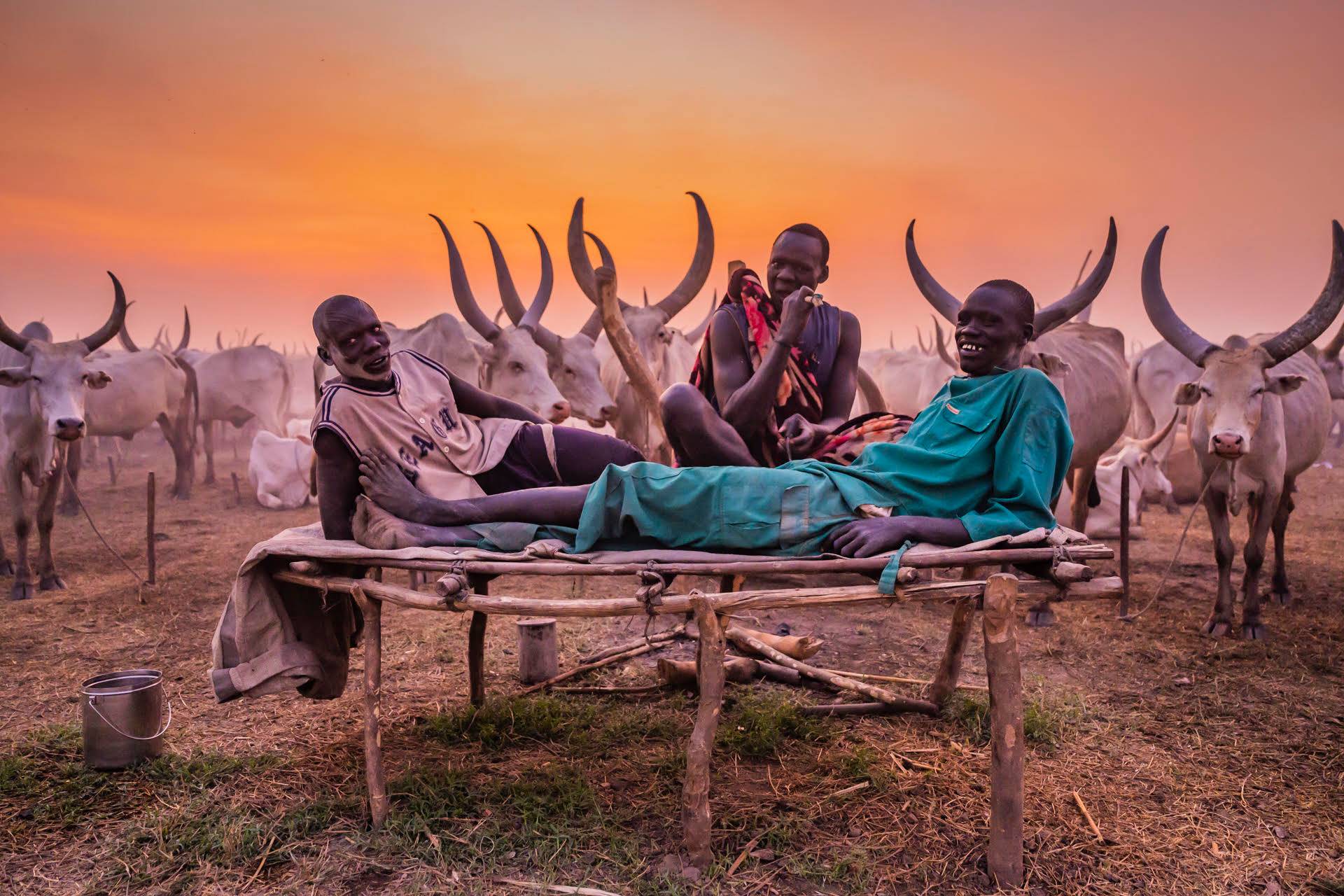
The Mundari are widely associated with cattle keeping, and cattle occupy an important place in aspects of their social and economic life.
Cattle can represent wealth, family connections, livelihood security and social identity. Daily routines may revolve around caring for herds, protecting animals and maintaining the relationship between people and livestock.
Photographs of cattle camps have attracted attention from documentary photographers and cultural travellers. However, these are living communities, not staged attractions.
Anyone considering a cultural visit should arrange it through trustworthy local contacts, seek permission before taking photographs, respect household privacy and follow guidance about appropriate behaviour around people and animals.
Dinka and Nuer Communities
The Dinka and Nuer are among South Sudan’s major ethnic communities, each with diverse traditions and regional identities. Cattle have important cultural and economic roles in many communities, although practices vary between families and locations.
Pastoralism, agriculture, fishing, music, oral traditions and social ceremonies contribute to the country’s cultural heritage.
A responsible guide should avoid reducing either community to a single custom or assuming that every visitor can access ceremonies and private community spaces.
Where cultural visits are possible, local consent and fair compensation should be integral to the arrangements.
Food and Everyday Life
South Sudanese food traditions vary by region and community. Meals may include grains, sorghum, maize, beans, vegetables, fish and meat, depending on local availability and household practices.
Food markets and everyday trading activities can provide insight into local livelihoods, but visitors should follow local guidance and exercise normal food and water precautions.
Anyone travelling with dietary restrictions should communicate requirements to accommodation providers and local organisers well in advance, especially where supply options may be limited.
Best Time to Visit South Sudan
South Sudan has a tropical climate influenced by seasonal rainfall, temperatures and the distribution of wetlands and floodplains. Conditions differ between regions, and travel practicality depends on more than weather alone.
Broadly, much of the country experiences a wetter period during the middle part of the year, while conditions are generally drier during other months. The precise timing and intensity of rainfall vary by location and year.
Weather can influence road conditions, accessibility, wildlife distribution and movement through wetlands. In some places, rainfall may make overland travel difficult; during drier periods, heat and dust may create other challenges.
For wildlife researchers, seasonal rainfall also affects the movement of grazing animals across the Great Nile Migration Landscape.
There is, however, an important distinction between identifying a season that may be favourable for wildlife observation and recommending that tourists travel at that time. As of October 2026, the UK government advises against all travel to South Sudan. Check current official guidance before considering any visit, regardless of the season.
South Sudan Travel Requirements
Travel requirements depend on the visitor’s nationality, travel purpose and point of entry. Rules can change, so travellers should confirm them with South Sudanese authorities and the relevant embassy before departure.
Visa and Passport
Visitors should check whether they need a visa and determine the correct application process before purchasing non-refundable travel arrangements.
Passport validity requirements, blank-page requirements and visa conditions should be confirmed for the traveller’s specific nationality. Do not assume that entry rules for one passport holder apply to everyone.
Health and Vaccinations
Consult a qualified travel-health professional well before departure. Ask about routine vaccinations, malaria prevention and any destination-specific health recommendations.
Yellow fever documentation may be required for entry, depending on the applicable rules. Confirm current requirements with the relevant authorities and check any health screening measures in force at the time of travel.
Travel-health advice should also cover safe drinking water, food hygiene, insect protection and access to medical care.
Travel Insurance
Insurance deserves particular attention because some policies exclude travel to destinations against which a government advises against all travel.
Before considering a journey, obtain written confirmation that the policy covers the destination, intended activities, medical evacuation and relevant emergency costs. Do not assume that a standard travel policy will provide protection.
How to Get to South Sudan
Juba International Airport is the country’s principal international gateway. Available routes, airlines, transit requirements and schedules can change, so travellers should verify connections directly with airlines and relevant authorities.
South Sudan also shares land borders with neighbouring countries, including Uganda. However, a border crossing that exists geographically is not necessarily open, safe or suitable for international tourists at any given time.
Before planning an overland journey, check the status of the crossing, entry requirements, road conditions, security advice and any necessary permissions. Do not assume that a Uganda–South Sudan itinerary is practical simply because the two countries share a border.
Domestic travel may require additional planning because of distances, infrastructure, limited services and changing local conditions. Remote wildlife areas may need specialist logistical support, but specialist arrangements do not remove security risks.
Accommodation and Travel Services
Accommodation options and service standards vary by location. Juba is the country’s main urban centre and offers more established services than many remote areas, but travellers should independently verify the availability, location and operating status of any property.
Outside the capital, accommodation, communications, medical support and transport may be limited. For any proposed trip, establish what is actually available rather than relying on old listings or generic descriptions.
Tour operators should also verify local partners, transport arrangements, permissions, emergency procedures and payment terms before offering a package for sale.
Responsible Tourism in South Sudan
Responsible tourism is especially important where communities, wildlife habitats and tourism infrastructure are subject to significant pressures.
Travellers and operators should consider the following principles:
- Respect local communities: Obtain permission before photographing people, homes, livestock or community activities.
- Use verified local expertise: Work with appropriately qualified and authorised local professionals when travel is possible.
- Protect wildlife: Maintain suitable distances from animals and follow conservation rules.
- Avoid unsupported promises: Do not guarantee wildlife sightings, access to remote communities or the availability of specific experiences.
- Check permissions: Confirm any required park permits, filming permissions or local authorisations.
- Prioritise safety: Reassess travel plans whenever official advice, local conditions or transport arrangements change.
Responsible tourism should support local livelihoods without putting visitors or host communities at unnecessary risk.
Frequently Asked Questions About South Sudan
Is South Sudan a good destination for a wildlife safari?
South Sudan has important wildlife landscapes, including Boma and Badingilo national parks and the Great Nile Migration ecosystem. However, significant security concerns and limited tourism infrastructure mean it should not be treated as a routine safari destination. Check current government travel advice before considering a visit.
What is South Sudan famous for?
South Sudan is known for the White Nile, the Sudd wetlands, its diverse communities and the large antelope migration across the Boma–Badingilo landscape. These features are important to the country’s natural and cultural heritage.
Can visitors see the shoebill in South Sudan?
The shoebill is associated with the wider Sudd wetland region. However, the possibility of a sighting depends on habitat, local conditions and access. Do not assume that a shoebill excursion is currently available or that a sighting can be guaranteed.
Can I visit South Sudan from Uganda?
South Sudan borders Uganda, but shared borders do not guarantee safe or straightforward travel. Check current official security advice, border operating status, visa rules, transport conditions and any relevant health requirements before making plans.
Do I need a visa to visit South Sudan?
Visa requirements depend on nationality and current entry regulations. Check the official requirements applicable to your passport with South Sudanese authorities or the relevant embassy before travelling.
When is the best time to see the Great Nile Migration?
Wildlife movements respond to seasonal rainfall, breeding cycles and grazing conditions. The timing varies across the wider landscape, so reliable local conservation information is needed for specific dates. Seasonal wildlife information should not be interpreted as a recommendation to travel when security advice warns against it.
Is South Sudan safe for tourists?
As of October 2026, the UK Foreign, Commonwealth & Development Office advises against all travel to South Sudan because of armed violence and criminality. Other governments may issue their own guidance. Review the advisory relevant to your nationality and do not rely solely on assurances from a tour provider.
Final Thoughts
South Sudan has a distinctive combination of cultural heritage, wetland ecosystems, river landscapes and large-scale wildlife migration. Its natural attractions, particularly the Sudd and the Boma–Badingilo migratory landscape, are important to conservation efforts and to the communities whose livelihoods are connected to these environments.
For travellers researching destinations beyond East Africa’s established safari circuits, South Sudan offers significant geographical and ecological interest. Yet its tourism potential must be understood alongside the country’s current security situation, travel limitations and practical challenges.
The most responsible approach is to research the destination carefully, rely on authoritative and up-to-date information, and avoid committing to travel until the relevant safety, entry and operating conditions have been independently verified.