Common Chimpanzees
The common chimpanzee, scientifically known as Pan troglodytes, is one of Africa’s most fascinating great apes. Also sometimes called the robust chimpanzee, it is native to the forests, woodland and forest-savanna landscapes of tropical Africa. Common chimpanzees are among the closest living relatives of humans and are known for their remarkable intelligence, complex social relationships, communication abilities and impressive use of tools.
Common chimpanzees are found across parts of West, Central and East Africa. Their historical range was much larger than the areas where viable populations survive today, and many populations have declined because of habitat destruction, hunting, disease and human encroachment.
Today, common chimpanzees are associated with countries including Uganda, Rwanda, Tanzania, the Democratic Republic of Congo, Cameroon, Central African Republic, Republic of Congo, Gabon, Equatorial Guinea, Nigeria, Ghana, Côte d’Ivoire, Guinea, Guinea-Bissau, Liberia, Sierra Leone, Senegal and several other parts of West and Central Africa. Their exact distribution varies because some populations have become isolated or disappeared from areas where they were previously found.
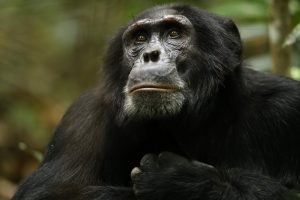
Unlike bonobos, which are found only south of the Congo River in the Democratic Republic of Congo, common chimpanzees have a much wider geographical distribution. They occupy different forest habitats and have adapted to a variety of environmental conditions.
Chimpanzees can spend significant amounts of time in trees but are also comfortable travelling and feeding on the forest floor. They build sleeping nests, communicate using a wide variety of sounds and body movements, and maintain complicated relationships within their communities.
Common chimpanzees are classified as Endangered because their populations continue to face serious threats throughout their range. Protecting their remaining forests is therefore important not only for chimpanzees but also for many other species that share the same ecosystems.
Interesting Facts About Common Chimpanzees
Common chimpanzees are fascinating animals because of their intelligence, social behaviour and close evolutionary relationship with humans. Several characteristics make them particularly interesting to visitors, researchers and wildlife enthusiasts.
Common Chimpanzees Are Highly Social Animals
Common chimpanzees live in complex social communities that can contain many individuals. Unlike animals that remain in small, permanent family groups, chimpanzees have a social system known as fission-fusion. This means that members of a community may spend time together in different combinations depending on food availability, social relationships and other circumstances. A large community can therefore divide into smaller parties during the day and later come together again.
Strong relationships are an important part of chimpanzee society. Individuals frequently groom one another, sit together, play and cooperate in different situations. Grooming helps maintain social bonds and can also help reduce tension between individuals. Young chimpanzees spend many years learning how to behave within their communities. They observe adults and older juveniles and gradually learn skills related to feeding, communication, tool use and social interaction.
Chimpanzee societies also contain hierarchies, particularly among males. However, these hierarchies are not completely fixed. Alliances between individuals can influence social status, and relationships can change over time.
Common Chimpanzees Use Tools
One of the most famous characteristics of chimpanzees is their ability to use tools. Chimpanzees have been observed using sticks to extract termites and ants from their nests. They can also use stones to break open hard foods and leaves as sponges to collect water from difficult-to-reach places. Tool use is particularly interesting because young chimpanzees often learn these behaviours by watching experienced members of their communities. This demonstrates the importance of social learning in chimpanzee society.
Different chimpanzee communities may also use different techniques. A tool-use behaviour that is common in one population may be uncommon or completely absent in another population. This has led researchers to describe some chimpanzee behaviours as cultural because they are learned socially and passed from one generation to another rather than being purely instinctive.
Chimpanzees Have Complex Communication
Common chimpanzees have a sophisticated communication system. They use vocalizations, facial expressions, body postures, gestures and physical contact to communicate with one another. Their vocalizations include loud pant-hoots, screams, grunts, hoots and other calls. Some sounds can travel considerable distances through the forest and help individuals locate members of their community. Chimpanzees also use gestures. They may extend their hands, reach toward another individual, embrace, touch or use different body positions to communicate.
Their facial expressions can also provide important information about their emotional state and intentions. Although chimpanzees are capable of learning symbols and forms of communication in controlled research environments, it is misleading to say that wild chimpanzees naturally understand or use human languages such as American Sign Language. Research has demonstrated their impressive capacity for learning symbolic communication, but their natural communication system is different from human language.
They Have Complex Social Hierarchies
Chimpanzee communities have complicated social relationships. Adult males often form alliances, and these alliances can influence their position within the community. Dominance is not determined simply by physical strength. Social relationships, age, experience, alliances and individual personality can all influence an individual’s position.
Females also have important relationships and social roles within communities. Their social lives should not be reduced to simply being subordinate to males. Chimpanzee societies are complex, and relationships vary between individuals and communities. Chimpanzees may cooperate with one another in feeding, territorial defence and other activities. At the same time, competition can occur over food, mates and social status.
Chimpanzees Have Distinct Vocalizations
Chimpanzees are very vocal animals. Their loud calls can sometimes be heard before the animals are seen during a forest trek. One of the most recognizable sounds is the pant-hoot. It is often used during social interactions and can help individuals communicate over considerable distances. Screams can indicate distress or conflict, while softer vocalizations can be used during close social interactions.
Communication is not limited to sounds. Chimpanzees also use gestures, facial expressions, postures and physical contact. For visitors on chimpanzee trekking experiences, hearing a group of chimpanzees calling through the forest can be one of the most memorable parts of the experience.
Difference Between Common Chimpanzees and Bonobos
Common chimpanzees and bonobos are sometimes confused because both belong to the genus Pan. However, they are two distinct species. The common chimpanzee is Pan troglodytes, while the bonobo is Pan paniscus. Common chimpanzees occur across parts of West, Central and East Africa, whereas bonobos are found naturally only in the Democratic Republic of Congo, primarily in forests south of the Congo River. Although they share many similarities, there are important differences between the two.
Physical Appearance
Common chimpanzees are generally robust animals with long arms, opposable thumbs and dark hair. Their facial appearance changes with age, and individuals can have pinkish, brown or dark facial skin depending on their age and individual characteristics. Bonobos tend to have a more slender body shape, longer legs and a somewhat different facial appearance. They often have darker faces and a characteristic head of parted hair. The differences are not always obvious to an inexperienced observer, especially when viewing the animals high in the forest canopy.
Behaviour
Common chimpanzees are known for complex social interactions that include cooperation, competition and territorial behaviour. Groups can defend their territories against neighbouring communities, and males may participate in coordinated patrols. Chimpanzees also hunt other animals on occasion, although their diet consists mainly of plant foods such as fruits, leaves, seeds and flowers.
Bonobos have different social patterns and are particularly known for strong female relationships and social behaviours that can help reduce tension. It is important not to oversimplify these differences by describing common chimpanzees as simply aggressive and bonobos as peaceful. Both species have complex social lives that include cooperation, competition, conflict and reconciliation.
Social Structure
Common chimpanzees generally live in communities organized around complex relationships and changing associations. Males often remain in the community into which they were born, while females commonly transfer to another community when they reach adulthood. Bonobo societies also have complex relationships but are generally characterized by stronger female social bonds. Both species demonstrate cooperation and social learning, but their social systems have evolved differently in response to their ecological and evolutionary histories.
Common Chimpanzee Subspecies
The common chimpanzee species is divided into four widely recognized subspecies. The Western chimpanzee, Pan troglodytes verus, occurs primarily in West Africa and has experienced significant population declines across much of its range. The Central chimpanzee, Pan troglodytes troglodytes, is found mainly in the forests of Central Africa, particularly within the Congo Basin.
The Eastern chimpanzee, Pan troglodytes schweinfurthii, occurs across parts of East and Central Africa, including Uganda, Rwanda, Tanzania and the eastern Democratic Republic of Congo. The Nigeria-Cameroon chimpanzee, Pan troglodytes ellioti, has a much more restricted range around Nigeria and Cameroon. Although these subspecies are genetically and geographically distinct, they share many of the same basic characteristics, including intelligence, tool use, complex communication and sophisticated social behaviour.
Trekking Common Chimpanzees
Chimpanzee trekking is an exciting wildlife activity that allows visitors to enter the natural habitat of these intelligent primates. Rather than viewing animals in captivity, travelers follow experienced guides and trackers into forests where chimpanzees live naturally. Chimpanzee trekking is available in several African countries, with Uganda, Tanzania and Rwanda being among the best-known destinations for visitors interested in observing wild chimpanzees.
The experience can vary significantly depending on the destination. Some forests have highly habituated chimpanzee communities that are accustomed to the presence of humans, while other experiences involve more limited or specialized encounters. Chimpanzee sightings cannot be guaranteed because the animals move freely through the forest. They may travel along the ground, climb high into trees or move through dense vegetation. This uncertainty is part of what makes chimpanzee trekking exciting.
Uganda
Uganda is one of Africa’s leading destinations for chimpanzee trekking. The country’s most famous destination is Kibale National Park in western Uganda. Kibale is renowned for its extraordinary primate diversity and is home to habituated chimpanzee communities that have been studied and monitored for many years. Chimpanzee trekking in Kibale normally begins with a briefing before visitors enter the forest with trained guides and trackers. The duration varies depending on where the chimpanzees are located and how quickly they can be found.
Visitors may encounter chimpanzees feeding in trees, moving through the forest, grooming one another, playing or communicating through loud calls. Kibale is particularly attractive because chimpanzee trekking can be combined with opportunities to see other primates. The forest supports species such as red colobus monkeys, black-and-white colobus monkeys, L’Hoest’s monkeys, grey-cheeked mangabeys and several other primates.
Kibale also offers the Chimpanzee Habituation Experience, which provides visitors with a longer opportunity to observe chimpanzees as researchers and trackers follow animals that are still becoming accustomed to human presence. Under Uganda’s current management guidelines, ordinary chimpanzee viewing is limited to a maximum of one hour once the chimpanzees have been located, while the habituation experience can provide up to four hours with the chimpanzees.
The cost of chimpanzee activities can change when Uganda Wildlife Authority updates its conservation tariff. Travelers should therefore confirm the current permit rate when planning their safari rather than relying on older prices. Uganda also offers chimpanzee experiences in areas such as Kyambura Gorge within Queen Elizabeth National Park, while additional forest destinations continue to develop their primate tourism potential.
Tanzania
Tanzania is another excellent destination for observing common chimpanzees, particularly in the western part of the country. Gombe National Park is one of the world’s most famous chimpanzee research sites. It is located along the shores of Lake Tanganyika and became internationally renowned through the pioneering chimpanzee research of Jane Goodall. The chimpanzees of Gombe have been studied for decades, making the park an important destination for travelers interested not only in wildlife but also in the history of chimpanzee research.
Visitors can follow forest trails with trained guides and rangers in search of habituated chimpanzee communities. The experience involves hiking through sometimes steep and challenging terrain. Another important chimpanzee destination in Tanzania is Mahale Mountains National Park. Located along Lake Tanganyika, Mahale combines tropical forest, mountains and spectacular lakeshore scenery.
Chimpanzee trekking in Mahale can be combined with boat excursions, hiking and other activities, making it an attractive destination for travelers looking for a more remote wildlife experience. Tanzania’s chimpanzee destinations are particularly appealing because of their combination of rainforest and Lake Tanganyika landscapes.
Rwanda
Rwanda is also home to common chimpanzees, with Nyungwe National Park being the country’s principal destination for chimpanzee tracking. Nyungwe is an extensive montane rainforest in southwestern Rwanda and is one of the most important forest ecosystems in the region. Chimpanzee trekking in Nyungwe involves entering the forest early in the morning with trained guides and trackers. The chimpanzees are constantly moving, so the experience can involve hiking through different sections of the forest before locating a group.
Nyungwe is not only a chimpanzee destination. Visitors can also encounter several species of monkeys and other forest wildlife. The park is particularly famous for its birdlife and the canopy walkway that provides elevated views across the rainforest. Chimpanzee trekking can therefore form part of a wider Rwanda safari that includes Nyungwe, Volcanoes National Park and Akagera National Park.
Best Time to Trek Common Chimpanzees
There is no single month that guarantees the best chimpanzee sightings across all destinations. Conditions vary from one forest to another, and chimpanzee behaviour changes depending on food availability, rainfall and other environmental factors. Many travelers prefer the drier periods because forest trails can be easier to walk and less muddy. In Uganda, these periods generally include June to September and December to February. However, an important point for travelers is that chimpanzee sightings are not necessarily better simply because the weather is dry.
Uganda Wildlife Authority notes that chimpanzee tracking can take place throughout the year and that rainy periods can sometimes provide good opportunities for tracking. During drier periods, chimpanzees may move deeper into the forest in search of food. Rainforests remain wet environments, so visitors should be prepared for rain regardless of the season. For the best experience, travelers should consider both weather conditions and the specific destination they plan to visit.
Costs of Trekking Common Chimpanzees
The cost of chimpanzee trekking varies considerably depending on the country, national park, visitor category and type of experience. There is therefore no universal chimpanzee trekking price that applies throughout Africa.
In Uganda, for example, chimpanzee trekking and habituation have separate fees, and the rates vary between foreign non-residents, foreign residents and East African citizens. Kibale’s chimpanzee habituation experience also costs more than ordinary chimpanzee tracking because it provides a substantially longer viewing experience. Tanzania and Rwanda have their own park fees, permits and tourism charges, while the overall cost of a chimpanzee safari also depends on accommodation, transportation, guide services and the number of days included in the itinerary. Travelers should therefore consider the total safari cost rather than looking only at the chimpanzee permit.
A chimpanzee trekking package may include transportation from the lodge to the park, accommodation, meals, park entry, guide services and other activities depending on the tour operator.
Conservation of Common Chimpanzees
Common chimpanzees face serious conservation challenges throughout their range. Habitat destruction is one of the biggest threats. Tropical forests continue to be cleared for agriculture, settlements, logging, mining and infrastructure development. Hunting is another major concern. Chimpanzees are sometimes hunted for bushmeat, while young individuals may be captured for the illegal wildlife trade.
Disease is also a serious threat. Because chimpanzees share many biological characteristics with humans, they can be vulnerable to diseases transmitted between humans and great apes. Conservation organizations and wildlife authorities therefore place increasing emphasis on responsible tourism, disease prevention and strict visitor guidelines.
Protected areas such as Kibale National Park, Nyungwe National Park, Gombe National Park and Mahale Mountains National Park provide important refuges for chimpanzees. Tourism can contribute to conservation by generating revenue for protected-area management, supporting local employment and creating economic incentives for communities living around wildlife habitats.
Responsible tourism is especially important for chimpanzees because visitors can potentially transmit diseases to habituated groups. Travelers should follow park rules, maintain the required distance from animals, avoid visiting when seriously ill and listen carefully to the instructions of guides and rangers.
The Future of Common Chimpanzees
The future of common chimpanzees depends heavily on the protection of Africa’s remaining forests. Chimpanzees need large and connected habitats because their communities travel considerable distances in search of food and suitable areas for nesting. Protecting isolated patches of forest is useful, but maintaining ecological connections between forests is equally important.
Community participation is also essential. Many people living near chimpanzee habitats depend directly on natural resources for their livelihoods. Conservation programs that support education, sustainable agriculture, alternative livelihoods and community tourism can help reduce pressure on forests. Scientific research continues to provide valuable information about chimpanzee behaviour, population trends, genetics and health. Long-term research sites such as Gombe have demonstrated how much can be learned when chimpanzee communities are monitored over several decades.
Chimpanzees are more than just another attraction on an African safari. They are intelligent, social and highly adaptable great apes that provide an extraordinary connection between humans and the natural world. Whether encountered in the forests of Uganda, the historic research landscapes of Tanzania or the ancient rainforest of Rwanda, a chimpanzee trekking experience offers travelers the chance to observe one of Africa’s most fascinating animals in its natural environment.
Protecting common chimpanzees will require continued investment in forests, wildlife protection, scientific research, responsible tourism and local communities. With effective conservation and sustainable tourism, the remaining chimpanzee populations can continue to survive in Africa’s forests for generations to come.