Eastern Chimpanzees
Eastern chimpanzees, scientifically known as Pan troglodytes schweinfurthii, are one of the four recognized subspecies of the common chimpanzee. They are among the most fascinating great apes found in Africa and are particularly important to the wildlife heritage of East and Central Africa.
Eastern chimpanzees are closely related to humans and share many physical, social and behavioural characteristics with us. They are highly intelligent animals capable of using tools, learning from one another, communicating through different sounds and gestures, and developing strong social relationships.
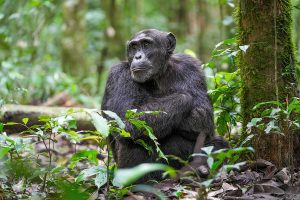
They occur mainly in countries across East and Central Africa, including Uganda, Rwanda, Burundi, Tanzania, the Democratic Republic of Congo and parts of South Sudan and the Central African Republic. Their distribution is closely associated with tropical forests, woodland and forest-savanna habitats, although populations have become increasingly fragmented because of human activities.
Uganda is one of the most important countries for Eastern Chimpanzees. Major populations occur in Kibale National Park, Budongo Forest, the Rwenzori Mountains, Queen Elizabeth Conservation Area and other forest landscapes. Recent national assessments have placed Uganda’s chimpanzee population at more than 6,000 individuals, making the country an important stronghold for the species.
Eastern chimpanzees are known for their complex social lives. They live in communities in which individuals form strong relationships, cooperate with one another and sometimes compete for social status. They spend time feeding, travelling, grooming, playing, communicating and resting within their forest habitats.
Their intelligence is one of the reasons chimpanzees are among the most studied animals in the world. Long-term research in Uganda and neighbouring countries has provided valuable information about their behaviour, ecology and conservation needs.
Family Composition
Chimpanzees are highly social animals and normally live within large communities rather than as solitary individuals. However, the entire community does not necessarily travel or feed together at the same time.
Eastern chimpanzees have what scientists call a fission-fusion social system. This means that members of a community regularly divide into smaller parties and later come together again. The size and composition of these temporary groups can change according to food availability, social relationships, reproductive behaviour and other environmental factors. A chimpanzee community can contain several dozen individuals and, in some populations, more than 100. However, it is common to encounter smaller parties when the animals are travelling, feeding or moving through the forest.
Chimpanzees have strong social relationships. Grooming is one of the most important activities they use to strengthen these relationships. Individuals may spend considerable time removing dirt, insects and parasites from one another’s fur while reinforcing social bonds.
Young chimpanzees remain dependent on their mothers for several years. During this period, they learn important survival skills by observing their mothers and other members of the community. They learn what foods to eat, how to move through the forest, how to use tools and how to interact with other chimpanzees. Chimpanzees are also capable of walking on two legs for short periods. However, their normal form of terrestrial movement is knuckle-walking, while their long arms and flexible hands help them move efficiently through the forest canopy.
Social Hierarchy and Leadership
Eastern chimpanzee communities have complex social hierarchies. Adult males often compete for social status, and high-ranking males can gain greater access to females, food and other social opportunities. The highest-ranking male is commonly referred to as the alpha male. However, chimpanzee leadership is not maintained simply through physical strength. Social alliances are extremely important. A male may form alliances with other males, cooperate with them and maintain relationships that help him retain or improve his social position. This means that chimpanzee politics can be surprisingly complex.
An alpha male does not necessarily remain dominant permanently. Changes in alliances, age, physical condition and relationships with other members of the community can influence the hierarchy over time. Female chimpanzees also have important social relationships and influence within their communities. Their roles should not be viewed simply in terms of being subordinate to males. Chimpanzee societies are complicated, and the relationships between males and females vary between individuals and populations.
How Eastern Chimpanzees Protect Themselves
Eastern chimpanzees face several natural predators, with leopards being among the important predators in some areas. Young chimpanzees may be particularly vulnerable. Chimpanzees have developed a number of ways to respond to potential danger. When they detect a predator or another threat, they may produce loud alarm calls that alert other members of their community.
The animals can also climb trees quickly when threatened. Adults may cooperate to defend themselves or intimidate potential predators through loud vocalizations, displays and coordinated behaviour. Humans, however, represent a much greater long-term threat to chimpanzee populations than most natural predators. Habitat destruction, hunting, snares, disease and human-wildlife conflict have affected chimpanzee populations across their range.
Daily Life of Eastern Chimpanzees
Eastern chimpanzees spend their days carrying out a variety of activities. Their daily routine can include feeding, travelling, grooming, playing, resting, communicating and searching for food. They do not spend a fixed percentage of their day sleeping or travelling because their behaviour changes according to age, season, food availability and social circumstances. Chimpanzees usually sleep at night in nests that they construct in trees. Before darkness, an individual selects a suitable location and arranges branches and leaves into a sleeping platform.
The nest is usually rebuilt each night rather than being permanently reused. Nest sites are also valuable to researchers because they can be used to estimate chimpanzee populations when direct sightings are difficult. During the day, chimpanzees may spend considerable time searching for fruits and other foods. They may travel through the canopy or along the forest floor depending on where food is available. Grooming is another important part of their daily life. It helps maintain relationships and can reduce tension within the community.
Difference Between Eastern Chimpanzees and Other Chimpanzee Subspecies
Eastern chimpanzees are one of four recognized subspecies of the common chimpanzee. The other three are the Western chimpanzee, Central chimpanzee and Nigeria-Cameroon chimpanzee. The Eastern chimpanzee occurs mainly in East and parts of Central Africa, while the Western chimpanzee is found primarily in West Africa. Central chimpanzees occupy much of the Congo Basin, while Nigeria-Cameroon chimpanzees have a smaller range around Nigeria and Cameroon. The differences between chimpanzee subspecies are generally subtle. They are more reliably identified through geography, genetics, morphology and evolutionary history than by one obvious physical characteristic.
Some descriptions have suggested that Eastern chimpanzees have a particularly round or thin head, shorter limbs or consistently darker hair than other subspecies. These characteristics should not be treated as absolute identification features because there is considerable variation between individual chimpanzees and populations. Eastern chimpanzees can, however, be distinguished scientifically as a distinct subspecies because of their geographic and genetic characteristics.
Characteristics of Eastern Chimpanzees
Physical Description and Appearance
Eastern chimpanzees have the characteristic body structure of common chimpanzees. They have thickset bodies, long arms, relatively short legs, opposable thumbs and no tail. Adults can vary considerably in size. Males are generally larger than females, although individual size depends on age, sex, health and environmental conditions. Their bodies are covered mainly by dark hair, while the face, ears, palms, fingers and soles of the feet are largely bare.
Their long arms are particularly useful for climbing and moving through trees. Chimpanzees are excellent climbers and can travel through the forest canopy while searching for fruit and other foods. Their hands have opposable thumbs, allowing them to grasp branches and manipulate objects. Their feet also have an opposable big toe, which is useful for gripping branches while climbing. Chimpanzees can therefore move through trees with considerable agility.
Their Similarity to Humans
Eastern chimpanzees share many biological similarities with humans. Chimpanzees are among our closest living relatives and share approximately 98% of their genes with humans. Their similarities are visible not only in their physical appearance but also in their behaviour. Chimpanzees form friendships, care for their young, cooperate with one another, compete for social status and display behaviours associated with conflict and reconciliation.
They can also recognize individuals within their communities and remember relationships over long periods. Their hands are particularly versatile. Chimpanzees can manipulate objects, use tools and perform tasks that require considerable coordination. Their facial expressions and body language also communicate information to other individuals.
Movement and Locomotion
Eastern chimpanzees spend time both in trees and on the ground. When walking on the ground, they commonly use a form of movement known as knuckle-walking. Their long arms and strong upper bodies support this method of locomotion. They are also capable of walking upright on two legs for short distances. This may occur when they are carrying objects, crossing certain areas or displaying particular behaviours.
In the trees, their flexible hands and feet allow them to grasp branches securely. Their opposable big toe is particularly useful for climbing. This combination of terrestrial and arboreal movement allows chimpanzees to exploit a wide range of forest habitats.
Diet of Eastern Chimpanzees
Eastern chimpanzees are omnivorous. Their diet is dominated by plant foods, but they also consume insects and occasionally meat. Fruits are among their most important foods. They also eat leaves, flowers, seeds, buds, bark, honey and other plant materials. Depending on the environment and availability of food, chimpanzees may supplement their diet with insects such as termites and ants.
They can occasionally hunt smaller animals, including other mammals and primates. Hunting behaviour can involve cooperation between several individuals. Chimpanzees are famous for using tools when obtaining food. They may use sticks to extract termites from underground nests or tree cavities and may use leaves to absorb water from places that are difficult to reach directly.
Their ability to use tools demonstrates their remarkable problem-solving skills. Eastern chimpanzees also play an important ecological role. By eating fruits and moving through the forest, they help disperse seeds over considerable distances. This contributes to forest regeneration and makes chimpanzees important members of their ecosystems.
Habitat of Eastern Chimpanzees
Eastern chimpanzees are primarily associated with tropical forests and other wooded habitats across East and Central Africa. They are particularly well adapted to forest environments where trees provide food, shelter and safe places to sleep. Much of their daily life involves moving through trees and searching for fruit. However, chimpanzees are not exclusively arboreal. They regularly come down to the ground to feed, travel and socialize.
At night, they normally build nests in trees. The height of a nest can vary depending on the location and surrounding vegetation. Forests are therefore essential to their survival. When forests are destroyed or divided into isolated patches, chimpanzee communities can lose access to food, sleeping sites and safe routes between different parts of their habitat.
Where Do Eastern Chimpanzees Live?
Eastern chimpanzees occur in several countries in East and Central Africa. Their range includes Uganda, Rwanda, Burundi, Tanzania and the Democratic Republic of Congo, with populations also extending into parts of South Sudan and the Central African Republic. The Democratic Republic of Congo contains extensive forests that are important for Eastern chimpanzees, while Uganda is one of the best-known countries for chimpanzee research and tourism.
In Uganda, important populations occur in Kibale National Park, Budongo Forest, the Rwenzori Mountains and other forest landscapes. Kibale National Park is particularly famous for its chimpanzees and supports one of the country’s largest populations. The park is also one of Africa’s most important destinations for chimpanzee tracking.
Budongo Forest, located within the greater Murchison Falls Conservation Area, is another important chimpanzee habitat and has supported long-term research and conservation programs.
Recent surveys have also revealed important chimpanzee populations in places that were previously less understood. For example, a 2025 census confirmed an estimated 426 chimpanzees in Bwindi Impenetrable National Park. This is particularly significant because Bwindi is internationally famous for its mountain gorillas but is also an important habitat for chimpanzees.
Eastern Chimpanzees in Uganda
Uganda is one of the most important countries for Eastern chimpanzee conservation and research. Recent national assessments indicate that Uganda had an estimated 6,075 chimpanzees in 2025. This represents an increase from earlier national estimates, although population figures should be interpreted in the context of different survey methods and newly available information.
Kibale National Park remains the country’s most famous chimpanzee destination. The park contains more than 1,500 chimpanzees and has several communities that have been habituated for research and tourism. Chimpanzee tracking in Kibale allows visitors to enter the forest with trained guides and trackers in search of habituated chimpanzee communities.
The experience is different from mountain gorilla trekking. Chimpanzees are highly mobile and can move rapidly through the forest canopy, meaning visitors may spend time walking before locating them. Once a group is found, visitors may observe the animals feeding, grooming, playing, resting or communicating. Other important chimpanzee destinations in Uganda include Kyambura Gorge in Queen Elizabeth National Park, Budongo Forest and selected forest areas within the wider Albertine Rift.
Threats Facing Eastern Chimpanzees
Despite their intelligence and adaptability, Eastern chimpanzees face serious threats.
Habitat Loss
Forest destruction is one of the most important threats. Agricultural expansion, settlement, logging, infrastructure development and other human activities can reduce chimpanzee habitat. When forests become fragmented, chimpanzee communities may become isolated from one another. Smaller populations can be particularly vulnerable because they have fewer opportunities for genetic exchange and may have difficulty finding sufficient food.
Hunting and Snares
Chimpanzees can also be injured or killed by snares intended for other wildlife. In some protected areas, wire snares set for antelopes and other mammals can accidentally catch chimpanzees. These injuries can result in permanent disability or death. Chimpanzees may also be hunted directly in some areas for bushmeat.
Human-Wildlife Conflict
Chimpanzees living near agricultural areas can sometimes enter farms and feed on crops. This can create conflict between local communities and wildlife. Conservation programs increasingly focus on reducing these conflicts while protecting both local livelihoods and chimpanzee populations.
Disease
Disease is another concern because chimpanzees are biologically similar to humans. Some human diseases can potentially be transmitted to great apes. This is one reason responsible chimpanzee tourism requires visitors to follow strict health and distance guidelines.
Conservation of Eastern Chimpanzees
Protecting Eastern chimpanzees requires a combination of habitat conservation, scientific research, law enforcement, community involvement and responsible tourism. National parks and forest reserves provide important protected habitats, but conservation cannot stop at park boundaries. Many chimpanzee habitats occur in landscapes where communities depend on forests for agriculture and other resources.
Community-based conservation can therefore play an important role. In Uganda, conservation organizations and government agencies have undertaken population surveys to understand where chimpanzees occur and how their numbers are changing. Long-term research projects in Kibale and Budongo have also provided valuable information about chimpanzee behaviour, social relationships and ecology.
Tourism can contribute to these conservation efforts by creating employment and generating revenue that supports protected-area management. However, tourism must be carefully managed. Visitors should maintain appropriate distances, avoid feeding animals, follow guide instructions and avoid entering the forest when sick.
Eastern Chimpanzee Trekking
Chimpanzee trekking is one of the most exciting wildlife experiences available in East Africa. Uganda is particularly well known for chimpanzee trekking, with Kibale National Park being the country’s most popular destination.
Visitors enter the forest accompanied by trained guides and trackers who use signs such as vocalizations, nests, feeding remains and footprints to locate chimpanzees. The experience can involve walking through dense vegetation and uneven forest terrain. Sometimes chimpanzees are found relatively close to the trail, while on other occasions visitors may have to walk considerably farther.
The unpredictable nature of the experience is part of its appeal. Seeing chimpanzees high in the trees, hearing them communicate across the forest or watching a mother care for her infant can be an unforgettable wildlife experience. For visitors who want to spend more time studying chimpanzees, habituation experiences provide a longer opportunity to observe animals that are becoming accustomed to human presence.
The Future of Eastern Chimpanzees
The future of Eastern chimpanzees depends on the continued protection of Africa’s remaining forests. Their survival requires large, healthy habitats where communities can find food, reproduce and move safely between different areas.
Conservation efforts must also address the needs of people living around chimpanzee habitats. Sustainable agriculture, education, alternative livelihoods and responsible tourism can help reduce pressure on forests. Research will continue to play an important role in understanding population trends. Recent surveys in Uganda have already demonstrated that chimpanzees occur in more areas than previously understood, including the newly documented population in Bwindi.
Eastern chimpanzees are a remarkable part of Africa’s natural heritage. Their intelligence, social relationships, ability to use tools and close relationship with humans make them one of the most fascinating animals to encounter in the wild. For travelers visiting Uganda, Rwanda, Tanzania or the Democratic Republic of Congo, an opportunity to observe Eastern chimpanzees provides much more than a wildlife sighting. It offers a chance to enter the forests where these intelligent great apes live and to witness their complex behaviour in their natural environment.
Protecting these forests and the chimpanzees that depend on them will remain essential for the future of East and Central Africa’s biodiversity.