Kampala City Tour
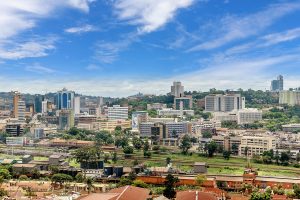
Kampala City traces its existence from back as 1891. These are the olden days when the King’s court of Buganda usually sat at either Mengo or Rubaga hills. With the colonialists’ arrival in the region, many changes followed, leading to the area being gazetted as a Municipality. Until recently, it has grown to become Uganda’s largest city and host millions of people from across the globe for various reasons ranging from academia, commercial, politics, and the like.
Uganda National Museum
It’s the first its kind and was commenced sometime in 1908. This was at Fort Lugard situated at the old Kampala hill. It’s the oldest museum in Uganda. Presently, it’s at Kitante hill one of the other hills of Kampala. This has been so since sometime in 1941.
It exhibits the cultural heritage (mixed with triumphs and shortcomings of the old day Uganda, treasures in all forms available, old day traditional weapons, teaches about the shifts in the traditional lives of the inhabitants of Uganda over the year, musical, arts and craft, music instruments, and many more other alike.
Kabaka’s Palace
Alternatively known as the Lubiri, it’s located at Mengo in Kampala City. The Lubiri is the Buganda language given to the King’s (“Kabaka”) palace. Traditionally, each new King of Buganda to take the kingship chooses a hill on which they desire their palace to be constructed. The current hill on which the Kabaka’s palace is situated was chosen by Kabaka Mwanga sometime in 1885.
The current Kabaka is Kabaka Ronald Muwenda Mutebi II. The fireplace (ekyoto) as the entrance of the Lubiri is the welcoming phenomenon to the tourists which signifies that the King is still in reigns. Across the Lubiri there’s a lot to learn about the political seasons of Buganda and the achievements that Buganda has acquired overtime
Kasubi Royal tombs
This is the official royal burial site for the deceased Kings of Buganda, Central Uganda’s most dominant tribe. It’s also classified under the UNESCO heritage sites. While here, not only do the tourists learn of the cultural history of the Kingdom, but also the King’s contributions to shaping the modern-day Uganda.
To make the site from appealingly, it’s situated on one of Kampala district’s 7 hills, Kasubi hill. Its history dates back to the days before the colonialists took over much of the lands of the Kingdom. The tombs are taken care of and maintained by the surviving wives to the deceased Kings or their female descendants as a symbol of cultural cultivation. There are also some cultural events that take place here and in deed, this is great place to tour.
Gaddafi Mosque
Alternatively referred to as Uganda National Mosque, it sits majestically on Kampala Hill. It’s the home to the headquarters of the Islamic faith leadership in Uganda. This is where their council also sits for any inquiries. It’s first bricks of construction were laid forth in 1972. It took its name from Colonel Muammar Gaddafi, the then leader of Libya. The naming was done by Iddi Amin, the then president of Uganda.
Upon the death of Gaddafi, it was renamed The Uganda National Mosque. It should be known however that the Mosque still holds its former name by most of the population. Its minaret (the structure where the muezzin calls on the Muslims to make route for prayers) is regarded as the tallest in Africa. Additionally, is its size, which gets it regarded as the biggest Mosque on the Africa continent.
Bahai temple
It was the first Bahai temple to be constructed in Uganda, after being officially opened sometime in 1962, in the very year Uganda attained independence from the colonialists. It forms part of the only such 9 temples across the globe. Its alternate name is Mashriq I’-Adhakar. The Bahai faith is composed of various different faiths and seeks to unite the many faiths across the globe. It hinges its teachings on the aspects of humanity. Tourists that want to learn more about this faith that has earlier roots from 1850, should visit this temple whenever they are Kampala.
Namirembe Cathedral
It’s affiliated to the Anglican Church and is the oldest Church of Uganda. Amongst all the other cathedrals, it’s the oldest too. It was brought forth in 1890, and oversees the Namirembe Diocese, which doubles as the first diocese to be formed in the Church of Uganda.
This 4,000-capacity church is another settler of one of the major 9 hills of Kampala City. Its construction was masterminded by Arthur Pite, a British architect. While construction had started in earlier years, the first official opening for prayers was sometime in 1919. It has spectacular history and designs that no tourist should miss out on.
- Uganda Martyrs Shrines in Namugongo.
It’s safe to say that it’s the most famous religious site in Uganda. The reason for this is because of the regrettable history that it bears along it. The story is of the Christian converts and believers that had changed faith from the traditional setting when the tourists came into Buganda during the reign of Kabaka Mwanga. On failure to obey the King’s orders in abandoning their new adopted faiths, he ordered for their killing.
It’s in this regard that the murdered believers are regarded as martyrs. And there’s an annual commemoration and celebration of their devotion to their faith each 3’rd day of June. Pilgrims travel from all-over the world to Namugongo on that day to commemorate the martyrs. There’s a shrine at Namugongo and there’s much to learn about the deceased martyrs and history of the church.
Kabaka’s Lake
It’s a man-made lake and was set up sometime in 1880 during the reign of Kabaka Mwanga. The major reason was for purposes of connecting easily with Lake Nalubaale (Victoria). It’s estimated at about 200 meters deep. One other reason was to facilitate an easy escape route for the royals and their subjects when danger such as devasting wars arose. It’s also the largest such lake in Uganda that’s regarded as man-made.
All the clans of Buganda Kingdom participated in the digging to achieve this phenomenon. The Kabaka being part of the digging. It sits at Ndeeba, and there’s a good view for the tourists especially those interested in birding, because there’s many of those.
Rubaga Cathedral
Alternatively referred to as St. Mary’s Cathedral, Rubaga, took share of the hills that make up Kampala, and sits on one (Lubaga Hill). It was initially in the possession of Kabaka Mutesa 1 but was later abandoned after the King’s palace was annihilated by a fire outbreak.
Construction works over this cathedral were commenced in as early as 1914, and it was until sometime in 1925, that the construction was finalized. The first Bishop of this cathedral was Joseph Kiwanuka, and after his wishes, was buried therein. He’s equally available for tourism. There’s generally much to tour and learn about this cathedral.
Nakasero Fruits Market
It’s in the heart of Kampala city and goes as far as keeping the title as being the oldest market that’s ever been established in Kampala, having kick-started as early as 1895. It was initially at the King’s palace but in 1927 it was transferred to its present location. When it comes to fresh garden produce, no market around Kampala beats this market. It’s therefore the main center for the fresh fruit loving tourists, and while there, they’d be spoilt for choices. Some other such markets are Owino Market, Kalerwe, Nakawa, and Wandegeya markets, and many more.
Craft and Art Galleries & markets
Art and craft still remain an inescapable reality for most communities globally. Equally, Uganda has made a mark for its own over the years and presently there’s the Maridadi Crafts along Nakasero road. Additionally, the National theatre has a well-established craft center. The craft market along Buganda Road around the city is perhaps the most famous among them. There are others that lie in Kampala. Nommo and afriart galleries are some of the most famous art exhibition centers, and tourists should therefore look out for them whenever they are Kampala.
Monuments around Kampala
There are various monuments that’s on displayed across the capital, some of which include the independence monument. It was set up to commemorate the 1962 independence of Uganda from the colonialists. There’s Kabaka Mutesa 1’s monument, Kabaka Ronald Muwenda Mutebi II’s, some at the various educational institutions, and Uganda National Museum, with each having distinct significance. There are numerous activities for visitors including;
- The nightlife across the clubs and party venues scattered across the city.
- Boda boda tours on the numerous motorcycles across the capital city and these help a tourist get an actual feel of the physical aspects of Kampala city.
- Food/culinary tours enable a tourist taste the local foods and recipes of Uganda. Some of the foods can’t be easily accessed or to add, prepared as Ugandans. There are scattered food joints across Kampala and therefore a tourist should try them out.
- There are various shopping malls across Kampala city that sell both locally made and foreign imported goods. There are also local markets where tourists can find products that can’t be found elsewhere across the globe.
There are also other numerous activities to engage in such as cycling tours, horse riding, golf playing, among many others.